
vivo V80 review – Posh premium midrange phone with ZEISS cameras and large battery tested
Now, they’ve rolled out their latest premium midrange design, the vivo V80 for the Malaysia market. We got our hands on a test unit ahead of launch and put it through its paces – you can peruse our findings in our vivo V80 review below.
vivo V80 Review – Build and Design
Table of Contents
Launched scarcely nine months after the debut of its predecessor the vivo V70 in March earlier this year, the vivo V80 is a premium midrange phone that plays safe with a number of refinements over the proven formula of the vivo V70.
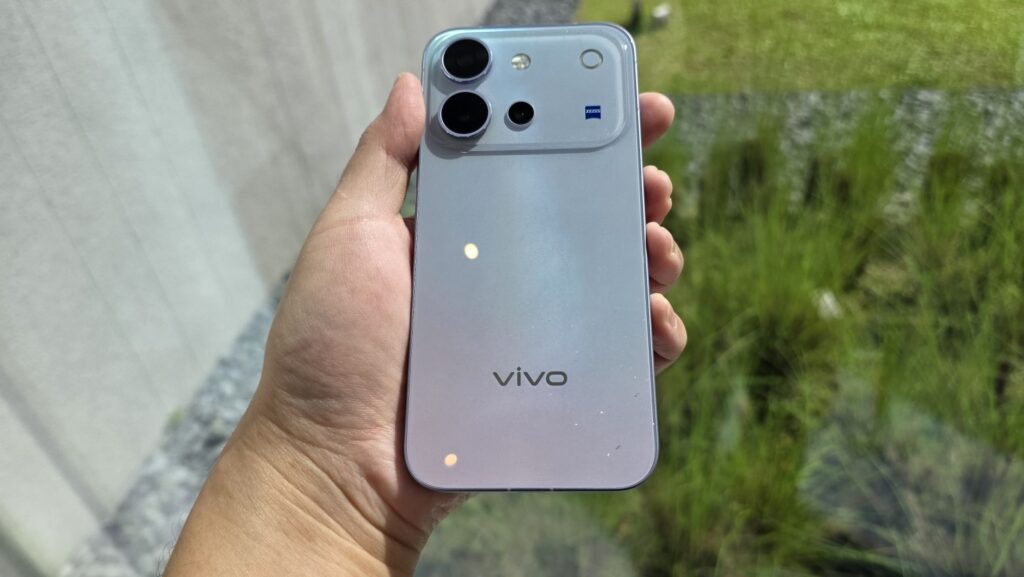
In terms of build and design, the vivo V80 has mostly similar dimensions compared to the vivo V70 though it is slightly heavier at 203g and slightly thicker on account of its larger 7,200mAh battery. The biggest visual difference is the design of its rear camera housing.
Where the vivo V70 had a compact square-shaped camera island, the vivo V80 extends the camera island almost edge to edge to dominate the upper quadrant of the phone which does lend it a resemblance to something issued from Cupertino.
The new design also naturally has a new colourway with our vivo V80 review sample coming in what they refer to as Starwish Purple. This works out to a pale lavender finish polished to a mirror sheen with a subtle trail of glinting stars from the base to the cameras which ties into their tag line ‘Shine As We Are’. It isn’t readily apparent to the naked eye until you hold it up to sunlight though it does look fetching when the light catches it in the right way.
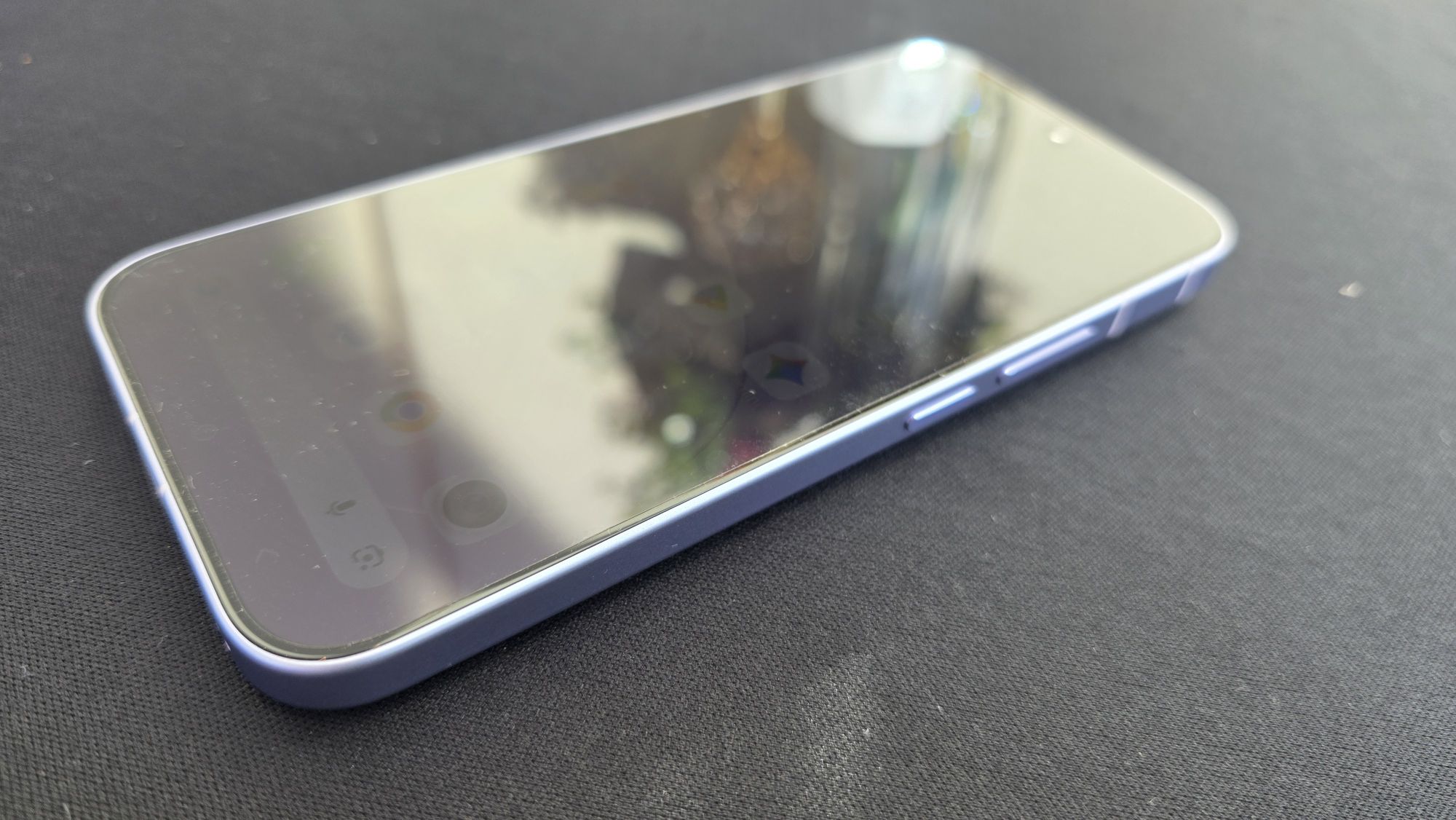
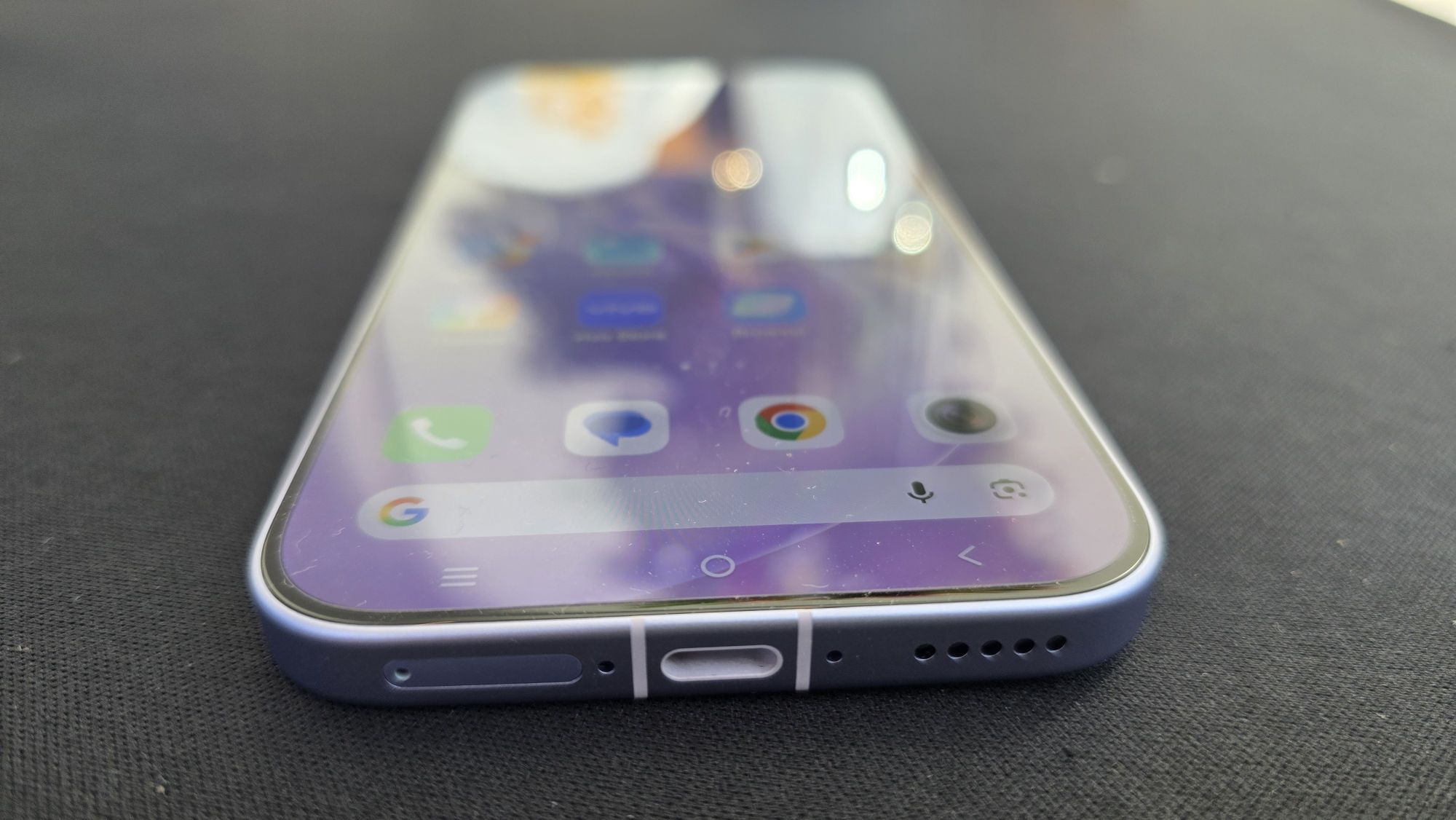
Backplate aside, our vivo V80 review unit retains the same layout as its predecessor with a power button and volume rocker on the right while the left and top are otherwise unremarkable. The base hosts a single USB-C port, a nano SIM card tray and a grille for a speaker.
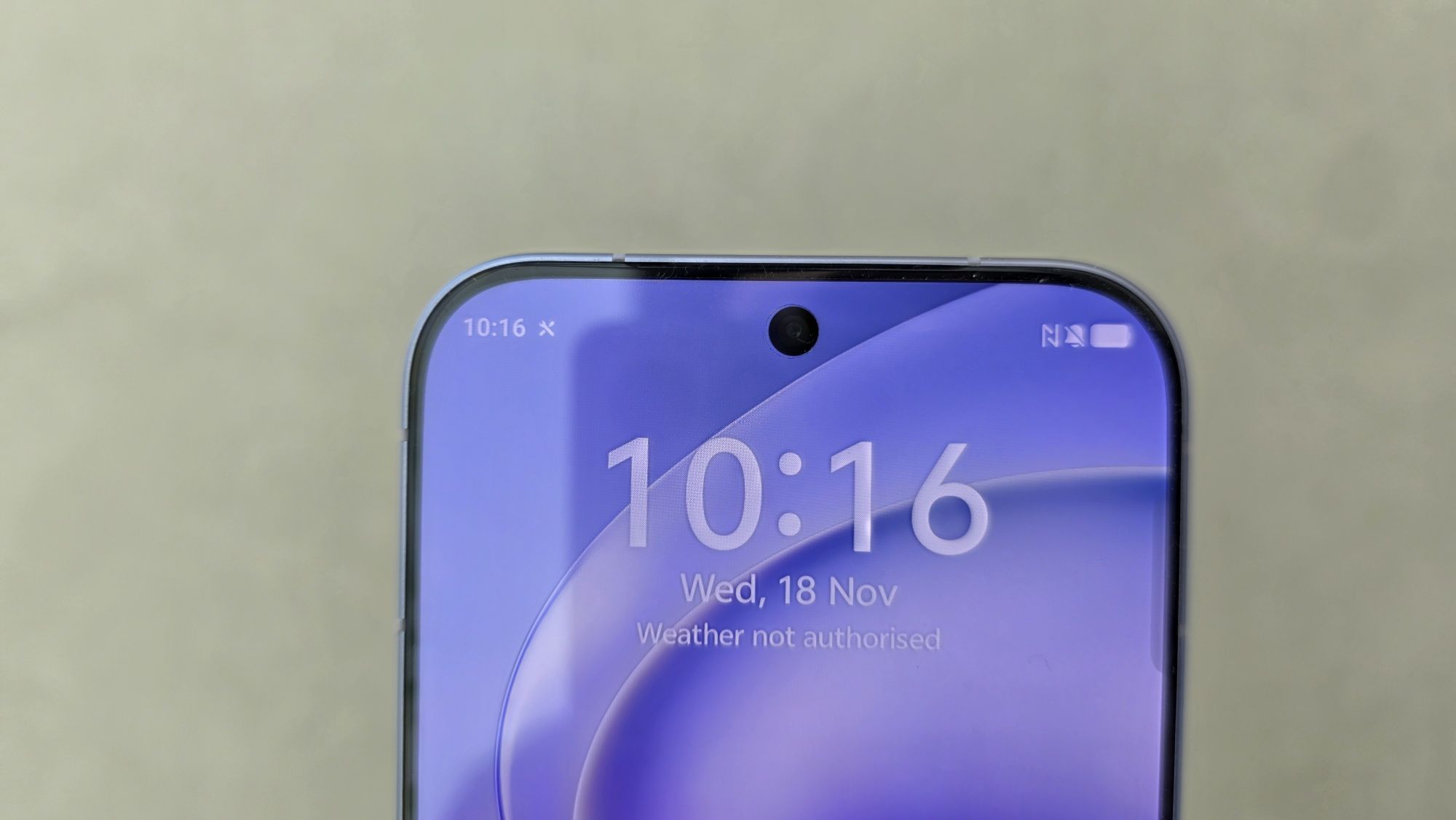
Up front, you have a 6.59-inch 1.5K AMOLED display with slim 1.25mm bezels, an improved 144Hz refresh and up to 5,000 nits peak brightness. Its predecessor the vivo V70 topped out at a 120Hz refresh rate while keeping the same resolution and peak brightness.
The bottom quadrant of the display hosts a 3D Ultrasonic fingerprint reader while the top has a single punch hole for a 50MP selfie camera and a slit for the earpiece and as a grille of sorts for the second speaker.
Fortunately, vivo didn’t skimp on building it tough and the phone retains an aerospace-grade metal frame and a shock absorbing internal framework that confers it an SGS Overall Drop Resistance Certification rating. Like the earlier model, the vivo V80 also retains an IP68/IP69 dust and water resistance rating which helps protect it from dust ingress and up to 1.5 meters of fresh water immersion for up to 30 minutes.
Even in these trying times, vivo has managed to bundle in a free casing and a charger with the phone alongside the obligatory USB-C cable, SIM eject pin and usual paperwork. Interestingly, vivo has also installed a free screen protector on the phone.
vivo V80 Review – Performance and Specifications
Closer inspection of our vivo V80 review unit demonstrates a remarkably familiar setup. Powering the vivo V80 is a proven midrange Snapdragon 7 Gen 4 processor paired with 8GB RAM and 256GB of storage while running the latest Android 17 and their own Origin OS 7.0. Astute readers will notice that this setup is similar to its predecessor save that it has slightly lower RAM which is understandable seeing the memory crunch these days.
Fortunately, the phone can assign up to 16GB of virtual Extended RAM off the onboard storage as needed. However, OriginOS doesn’t allow you to reassign the amount of available RAM though you can disable the option entirely if you’re short on storage space. Like the prior vivo V70, the vivo V80 also gets 4 years of OS and 6 years of security updates. Here’s how our vivo V80 review unit stacks up on paper:
| Price | 8GB RAM/ 128GB storage [RM2,599] / 8GB RAM/256GB [RM2,899] / 8GB RAM / 512GB storage[RM3,499] |
| Display | 6.59-inch AMOLED, 1,260 x 2,750 pixels, 144Hz refresh rate, 5,000nits peak brightness |
| Processor | Snapdragon 7 Gen 4 |
| OS | Android 17 w/ Origin OS 7 |
| Memory | 8GB RAM / 256GB storage (128GB and 512GB available) |
| Cameras | 50MP f/2.7 ZEISS Super Telephoto Camera w/ Sony IMX882 sensor & 3x optical zoom, 50MP f/1.9 ZEISS OIS Main Camera w/ Sony LYTIA 700V sensor & OIS (CIPA 4.5), 8MP f/2.2 ZEISS Ultrawide Angle Camera [rear] / 50MP f/2.0 ZEISS Group Selfie Camera |
| Battery | 7,200mAh BlueVolt w/ 90W FlashCharge wired charging |
| Size/Weight | 157.5 x 74.3 x 7.8mm /263g |
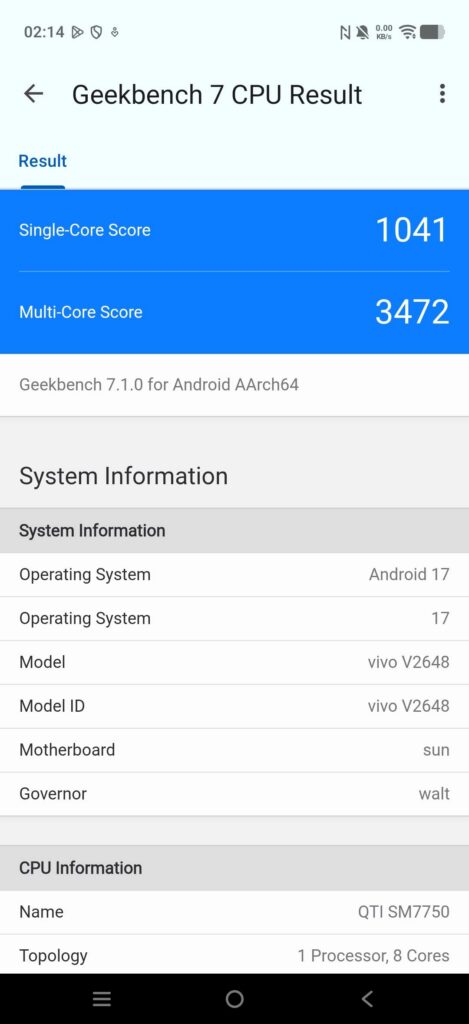
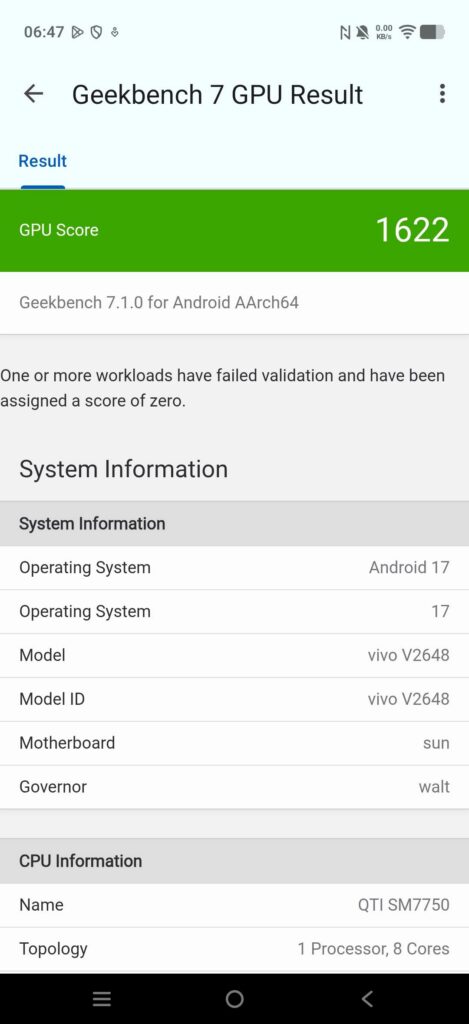
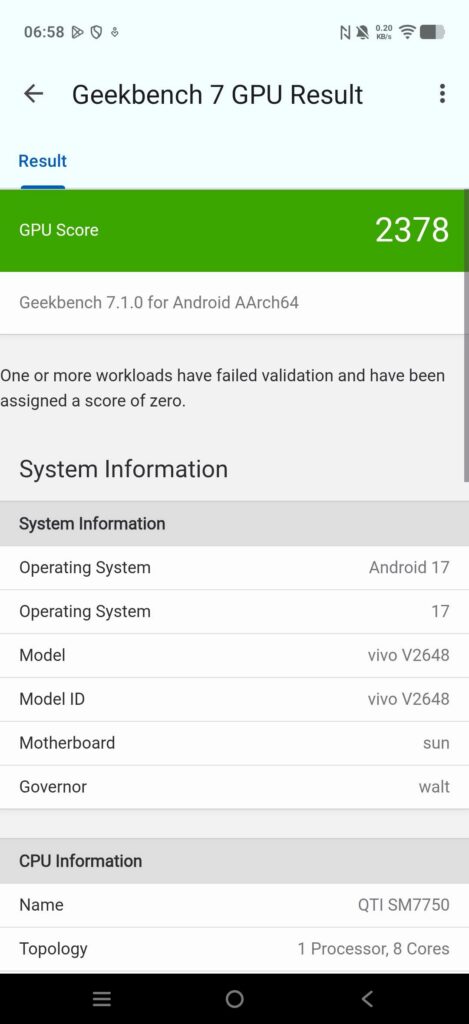
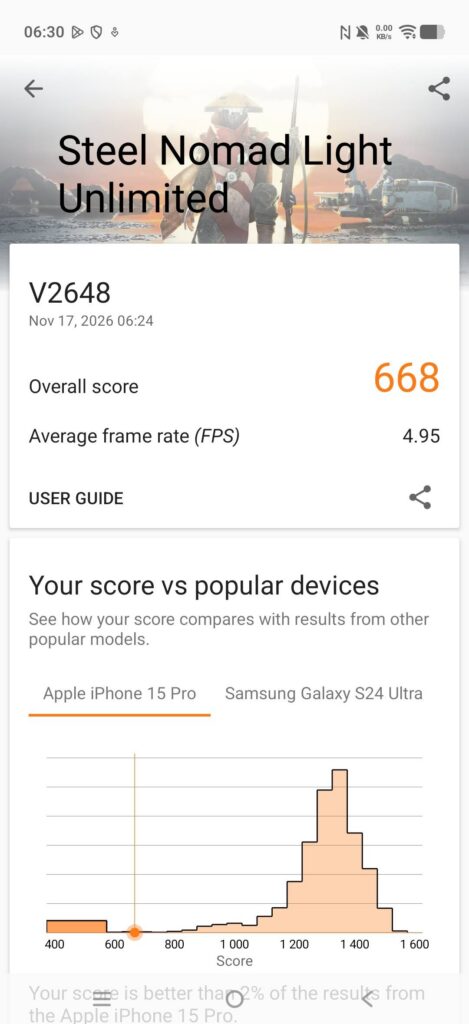
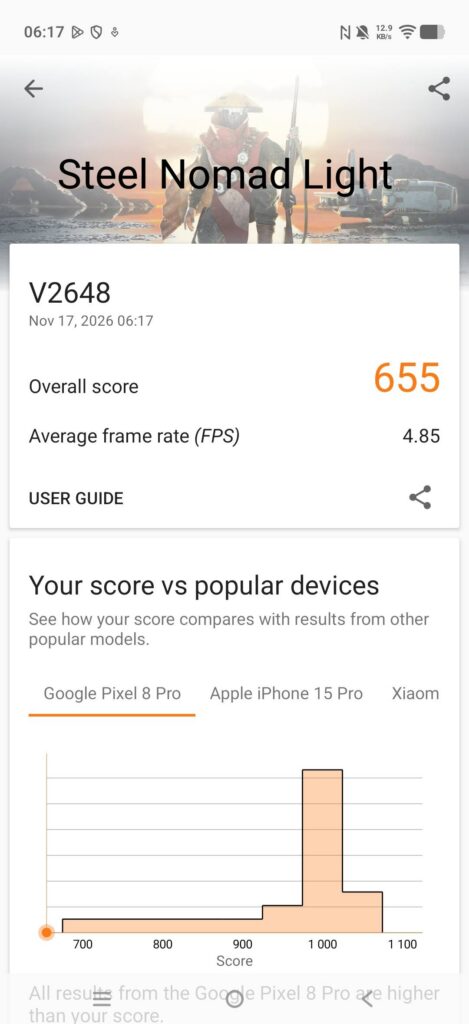
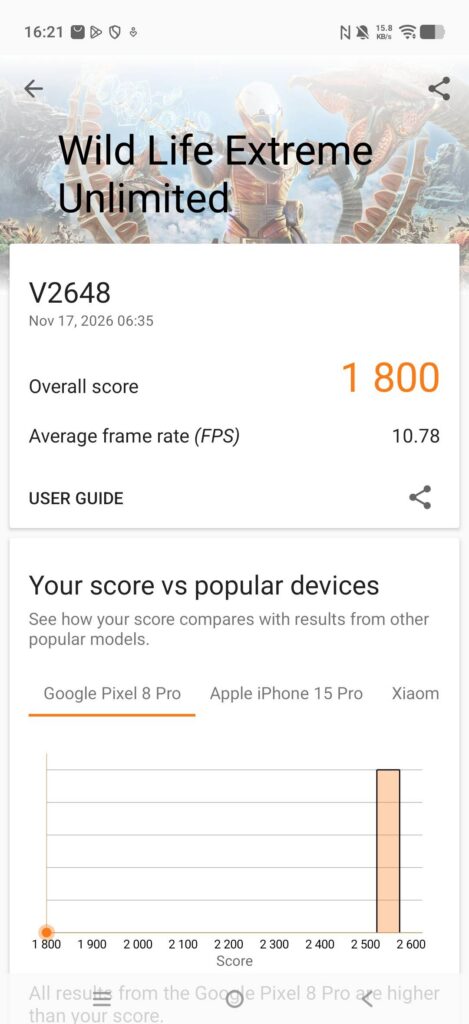
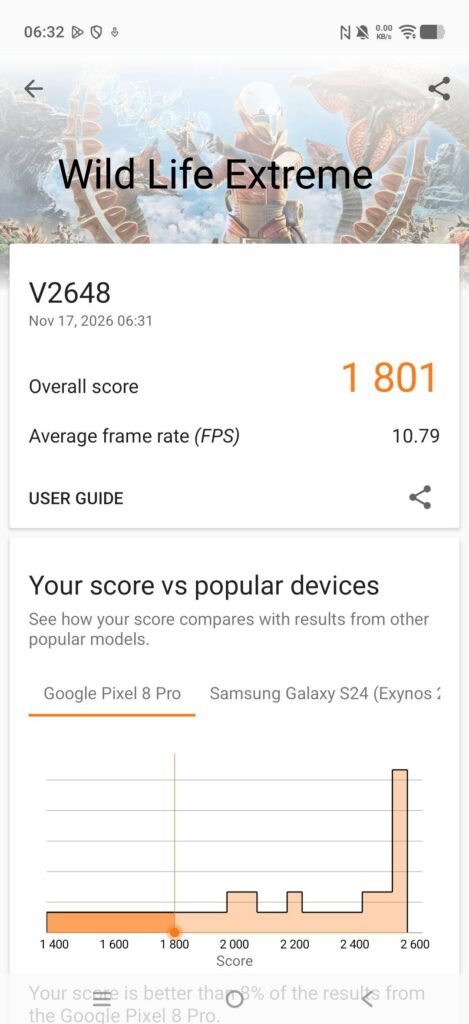
When subjected to synthetic benchmarks, our vivo V80 review unit got the following:
| 3D Mark Steel Nomad Light | 655 |
| 3DMark Steel Nomad Light Unlimited | 668 |
| 3D Mark Wild Life Extreme | 1,801 |
3D Mark Wild Life Extreme Unlimited |
1,800 |
| Geekbench 7 Single core | 1,041 |
| Geekbench 7 Multi core | 3,472 |
| Geekbench 7 OpenCL | 1,622 |
| Geekbench 7 Vulkan | 2,378 |
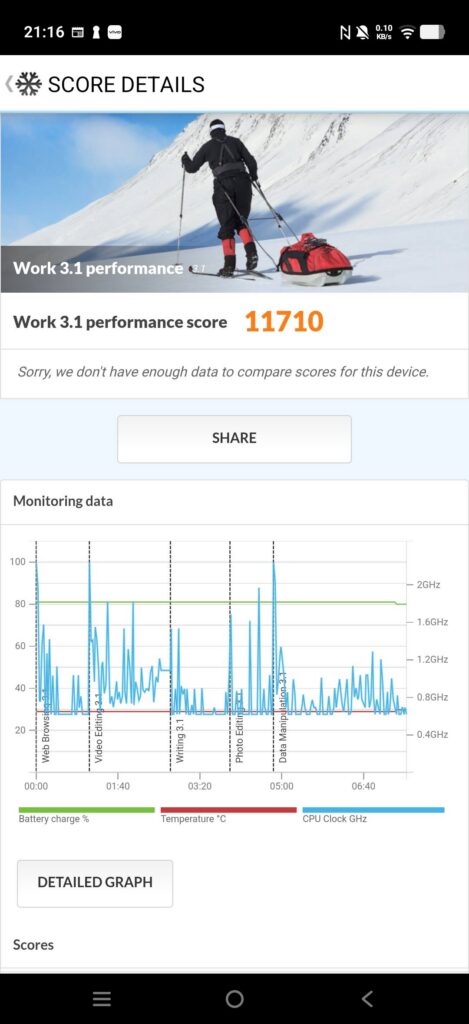
| PC Mark Work 3.0 | 11,710 |
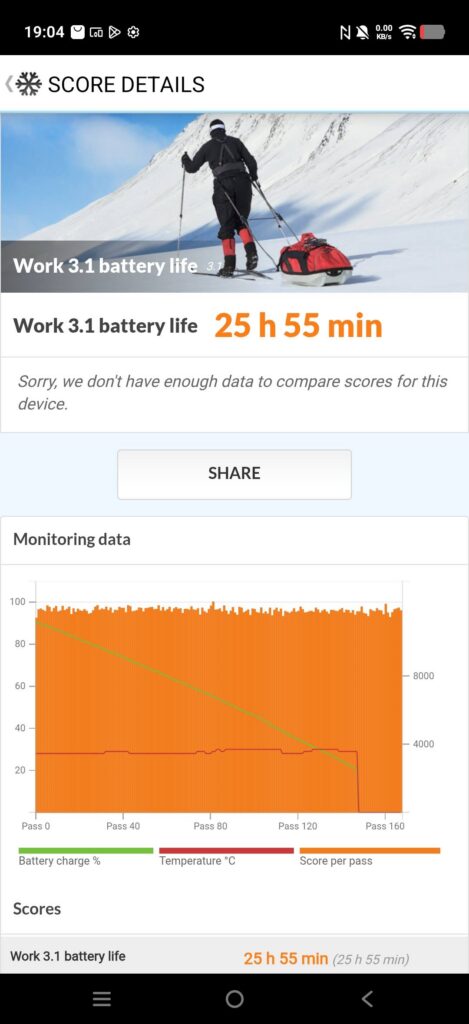
| PC Mark Battery Life | 25 hours 55 mins |
When tested, our vivo V80 review unit scored slightly lower than its predecessor in synthetic benchmarks for single, multicore CPU and graphics performance, despite both phones using the same Snapdragon 7 Gen 4 chipset. This is likely due to differences in firmware optimisation, thermal behaviour and the reduction in physical RAM from 12GB to 8GB, though benchmark variations are also possible.
Fortunately, the vivo V80 retains smooth day to day performance. The usual tasks expected of a midrange phone like web browsing, image editing, doom scrolling on social media and casual gaming on titles like Call of Duty Mobile and Genshin Impact ran smoothly without issue.
Getting about the phone is a generally pleasant and snappy affair though Origin OS 7 is still chock full of unwanted bloatware including preinstalled versions of Agoda, Netflix, Shopee and a host of other apps though they can be uninstalled without trouble.
The 6.59-inch OLED display on our vivo V80 review sample has similar dimensions, sharpness and brightness as the earlier vivo V70, serving up bright and punchy colours, deep backs and pin sharp text with good clarity in daylight conditions.
Where it gets a bump up is to a smoother 144Hz refresh rate though this is currently specific to a handful of games like Subway Surfers that support the full rate. By and large, the screen sticks to 120Hz when navigating the menus and 60Hz in most apps and games.
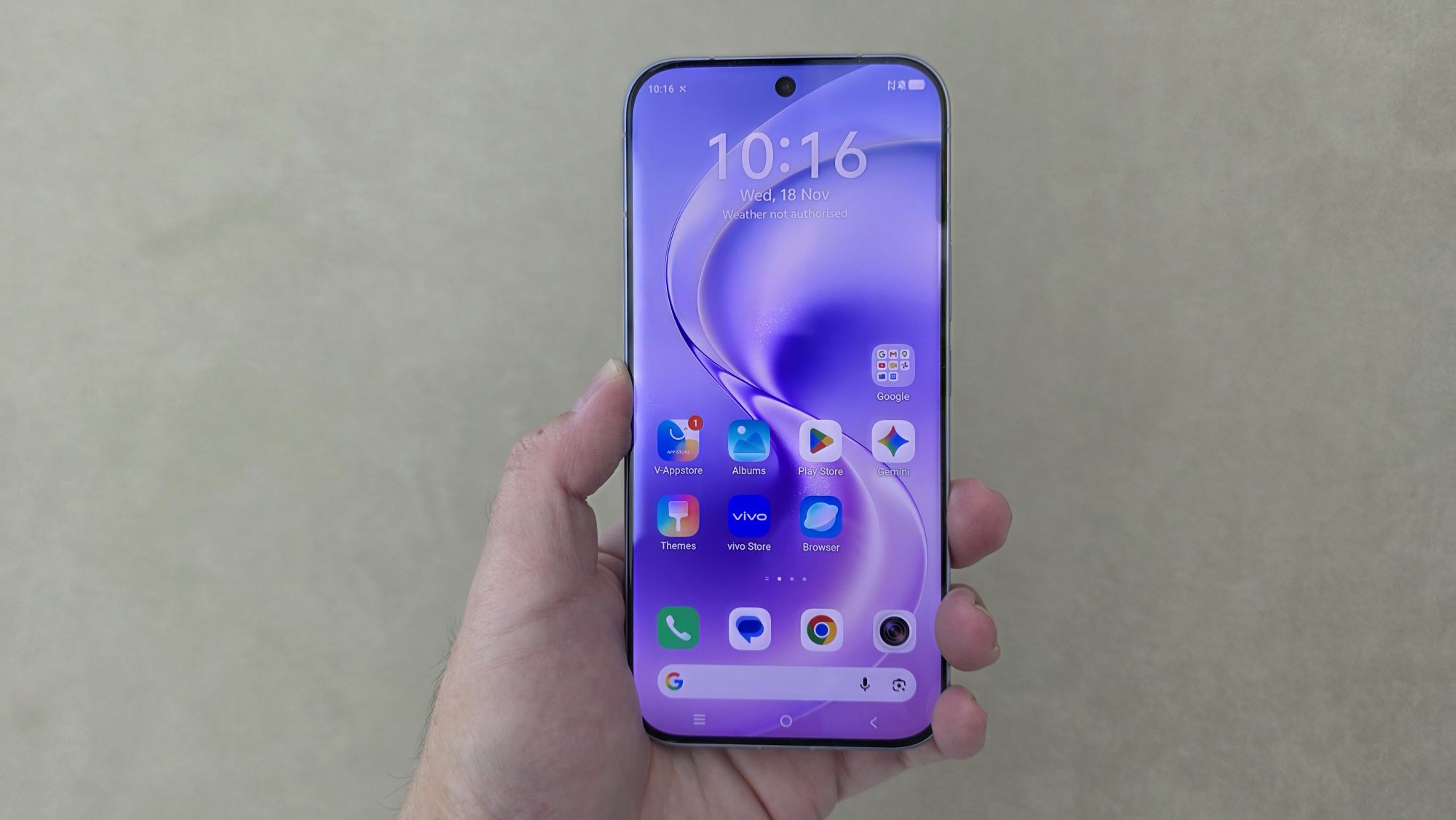
To save on battery life, you can dial the refresh down to Smart Adaption mode or Standard mode to cap the fresh rate down to 60Hz. Refresh rate aside, the display is a treat for watching movies as it supports HDR10 and HDR10+ content .
The provided stereo speakers haven’t radically differed from the vivo V70 and do a decent job for casual movie watching, gaming and music listening duties.
In terms of battery life, our vivo V80 review sample offered about 25 hours and 55 minutes of battery life in PCMark’s Battery Life test which is a bit short of that offered by the vivo V70 despite having a larger sized battery. Seeing as our unit was tested ahead of its official launch, this is likely due to prelaunch firmware and may improve in future updates.
Under practical field conditions, the phone was able to comfortably last short of two full days with normal usage – web browsing, social media, emails and a few minutes worth of calls with some casual gaming thrown in for good measure.
Charging it does take a bit longer than its predecessor though on account of the larger battery. vivo quotes a 50% charge in 30 minutes using the original provided charger with a full charge from dead zero requiring about an hour which is decent all things considered.
Overall, the vivo V80 is a decent all-rounder for most tasks while offering good endurance and a comparable performance envelope to other phones with the same chipset.
vivo V80 Review – Cameras
While the camera setup looks similar on paper with the older V70, the newer vivo V80 actually sports a new sensor for the main camera. This consists of a triple rear camera setup that has a 50MP telephoto camera, a 50MP main camera and an 8MP ultra wide angle camera with a 50MP front camera.
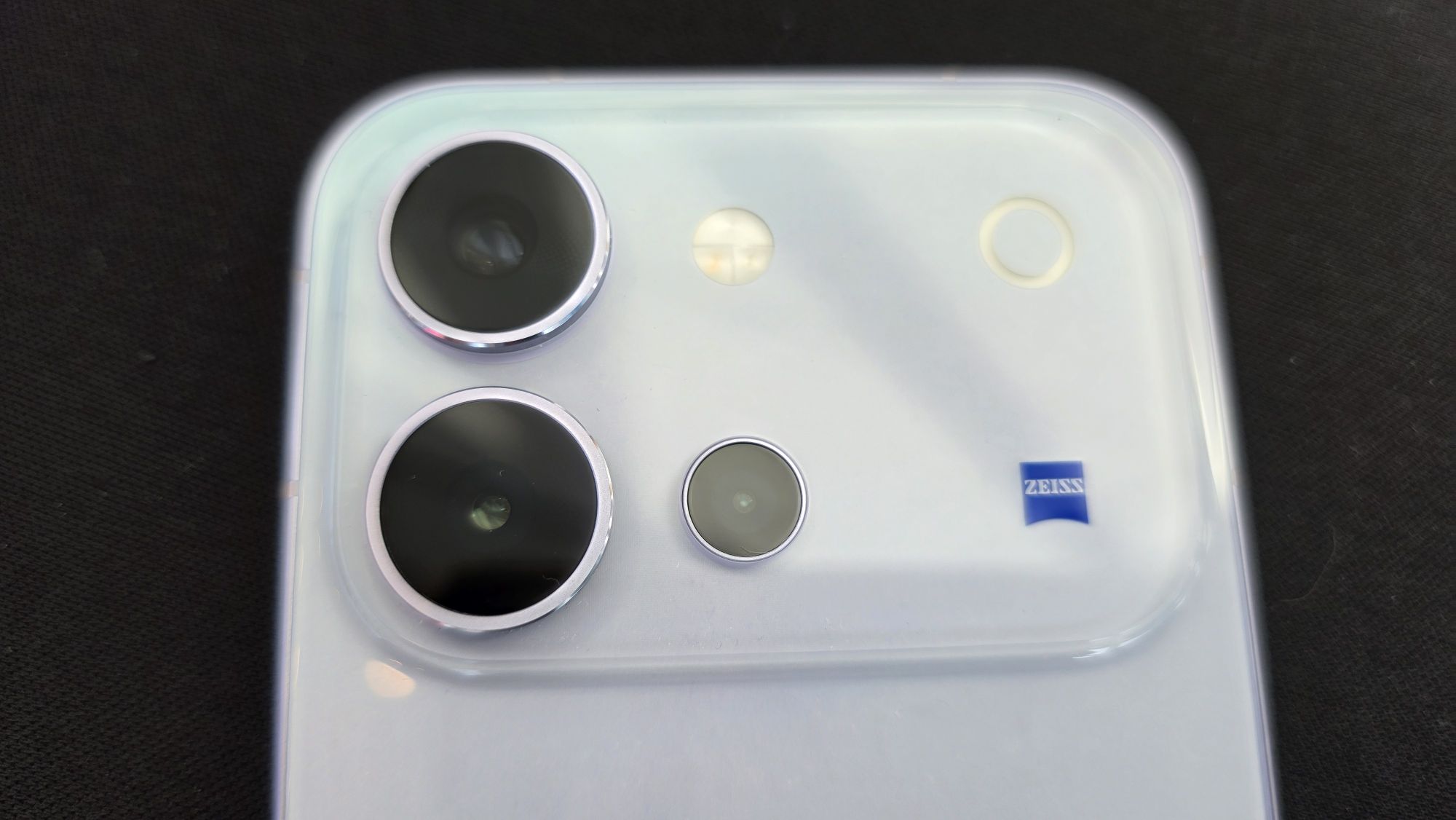
Taking centrestage is a 50MP ZEISS main camera that uses the Sony LYTIA 700V sensor with optical image stabilisation rated for CIPA 4.5 which helps especially in low light shooting.
The older vivo V70 relied on a Sony IMX766 sensor and also has a similar CIPA 4.5 stabilisation rating. On paper, the new Sony LYTIA 700V sensor offers improved low light imaging performance over the prior Sony IMX766 sensor.
Next up, the 50MP ZEISS Super Telephoto camera in our vivo V80 review sample retains the same flagship-grade Sony IMX882 sensor as the vivo V70 with similarly rated OIS as the main camera, offers 3X optical zoom and can dial in shots at up to 100x digital zoom. Almost unchanged is the 8MP ZEISS ultrawide angle camera that offers a 90-degree angle of view.


Like its predecessor, our vivo V80 review sample is able to capture stills with 3X optical zoom and up to 100x digital zoom as well as up to 4K@60fps video capture with up to 15x zoom. It bears mentioning that the vivo V80 remains one of the few midrange phones currently in the market that have a dedicated telephoto camera with optical zoom.

vivo V80 review – 85mm Centre Stage Portrait Mode
The front gets a single 50MP ZEISS Group Selfie camera with a 92-degree angle of view that has expanded 0.8x and 2.0x zoom options to get in more of the background as well as the ability to capture up to 4K@60fps video.

vivo V80 review – 100mm Centre Stage Portrait Mode
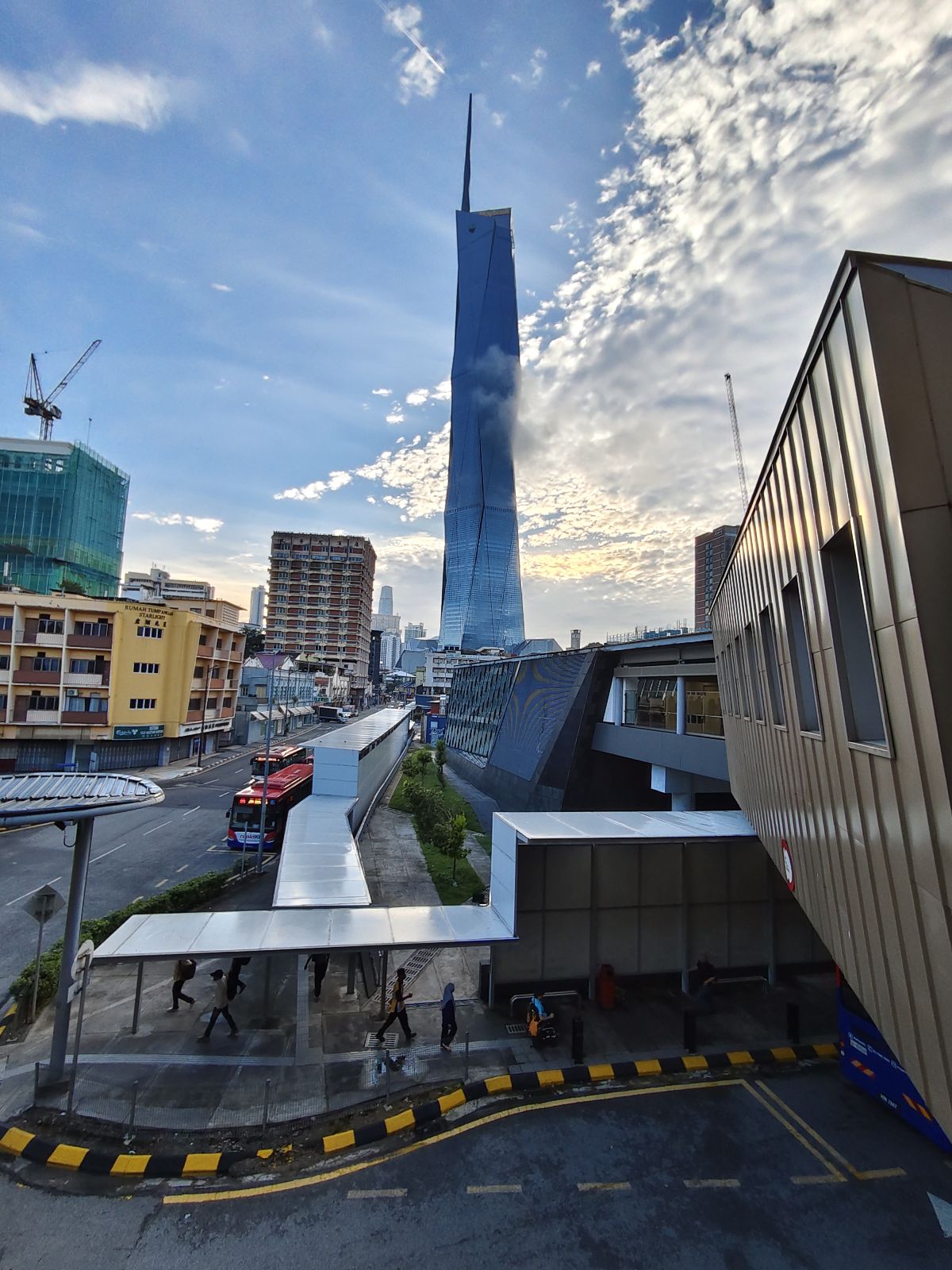
Day time performance when capturing stills is excellent with solid results out to about 10X zoom from the rear triple camera with good detail and lifelike colour rendition along with excellent dynamic range.
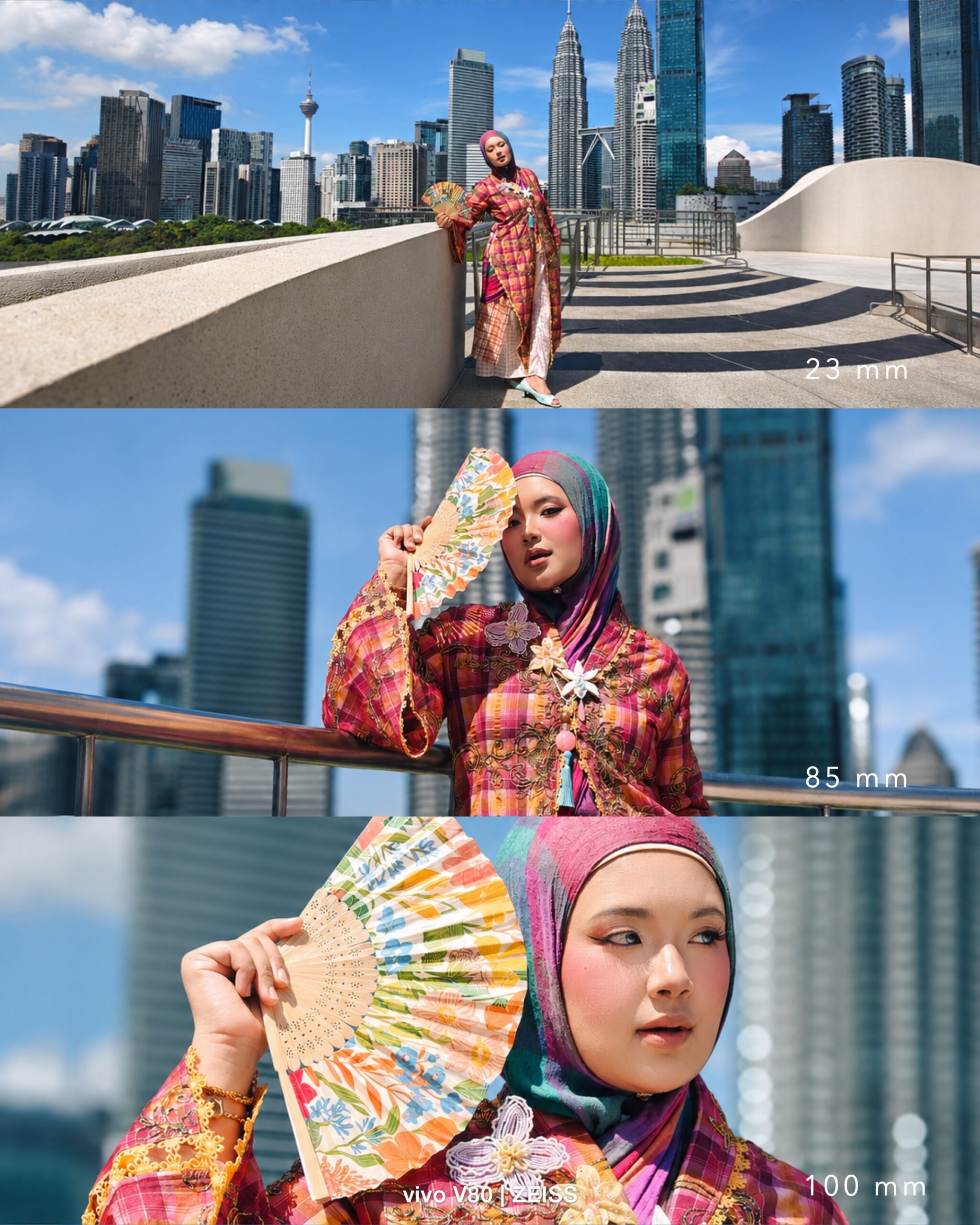
vivo V80 review – The 85mm and 100mm Centre-Stage Portrait Modes allow for more context in the background while retaining pleasing details for the subject. The top is the standard 1X zoom with the second using the 85mm and the third 100mm Centre-Stage Portrait mode.
While the rear camera array is capable of 100X digital zoom, it works best to capture architecture and scenery and you’ll need daylight conditions to yield the best results. In low light, results are understandably underwhelming but if you keep your shots to 3X zoom and under you’ll yield very shareable results.
Hardware aside, what makes the vivo V80’s rear triple camera setup stand out is its inclusion of a dedicated ZEISS 85mm and 100mm Centre-Stage Portrait mode for gorgeous looking portraiture with beautifully blurred out backgrounds and sharply detailed portraiture. The former is ideal for three-quarter length portrait shots while the latter 100mm Center Stage Portrait mode is ideal for half-length portrait shots.
For easy access, both Centre-Stage portrait modes are located in the camera’s Portrait mode tab. The aforementioned ZEISS 85mm and 100mm Centre Stage Portrait modes offer effective results without having to tweak and faff about the settings.
The vivo V80 also has a cornucopia of additional modes including a CCD Flash Portrait setting that bumps up flash brightness to 150%, darkens the background and highlights fair skin to create a retroesque look akin to older film cameras.
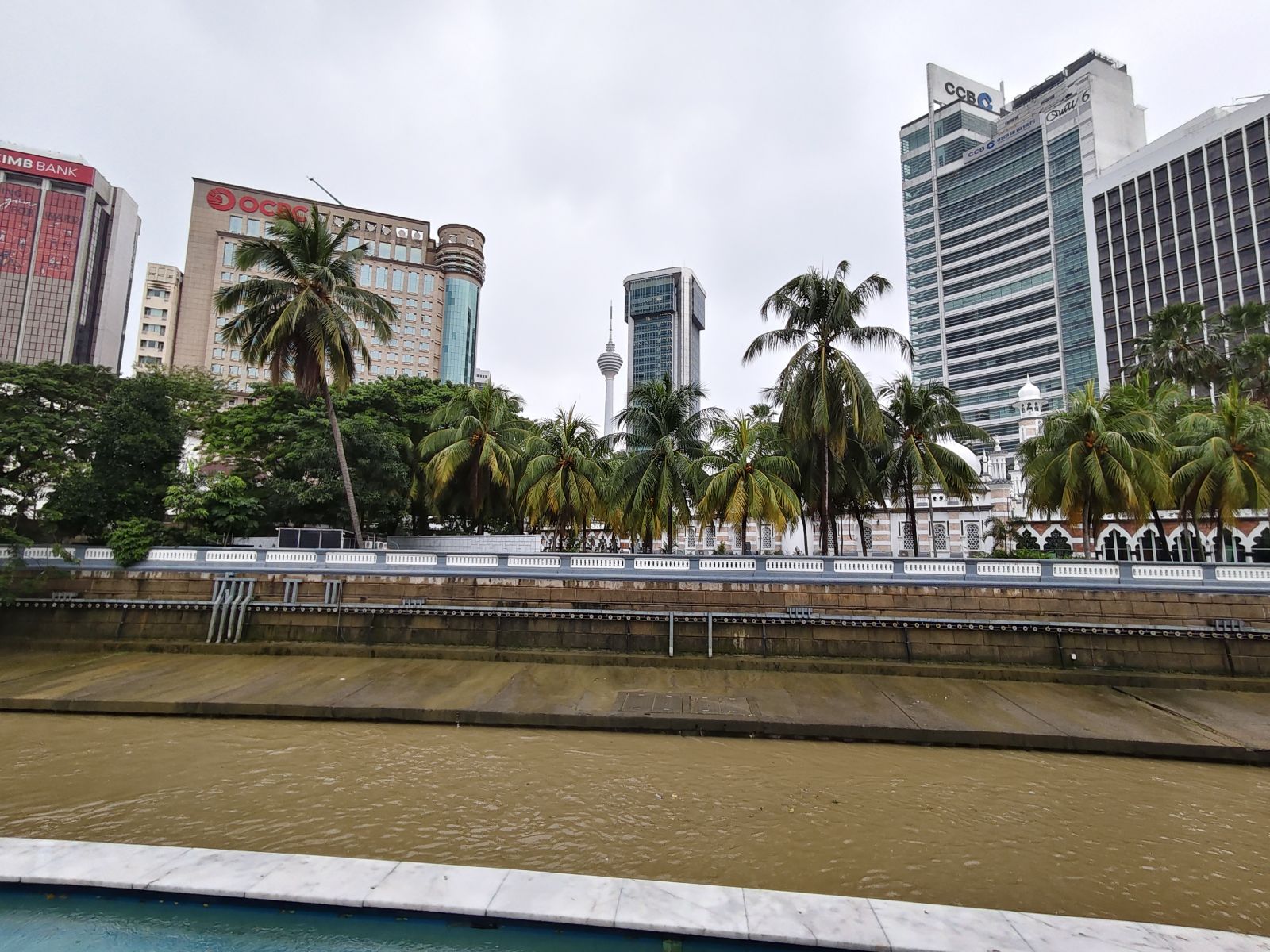
Day time rear cameras at 1x zoom

Day time at 100x zoom – close-up of KL tower
You also get an AI Creative Camera mode that lets you alter light sources in post. With some simple adjustments, you can alter lighting effects in a shot such as showing light through window blinds, side lighting, studio lighting and more. You can also enjoy the usual AI-powered features like AI Erase to remove unwanted objects in the background, expand an image to get in more of the background and adjust the size, angle and position of subjects in a shot for best results.
 When it comes to video capture, both the front camera and rear camera array are capable of capturing up to 4K@60fps video though each has slightly different stabilisation settings.
The rear camera array has what the phone refers to as Standard Stabilisation by default for all resolution settings though its Ultra Stabilisation mode is only available if you dial video down to 1080p@30fps. The front camera lacks this for video but does have a SteadiFace mode that keeps your face sharp and in focus.
Video captured at 4K@60fps from the main rear 50MP ZEISS main camera offers the best results with good detail, colour rendition and dynamic range while the 50MP ZEISS Super Telephoto camera offers similarly good footage out to 3X zoom.
The front-facing selfie camera offers pleasing skin tones and detail with the best results in daylight conditions though it is able to deliver good shots in urban night scenarios.
Combined, the vivo V80 offers a veritable toolkit of possible creative options though it takes some practice and experimentation to yield the best results.
Should you buy the vivo V80?
The vivo V80 is a premium looking midrange phone that offers a vibrant display, enhanced battery life and notably features a capable ZEISS-tuned triple camera array that can handle most imaging scenarios with an emphasis on delivering good portrait photography.

It isn’t as compelling an upgrade for those who already own its predecessor, the vivo V70. However, its larger battery, smoother display and improved main camera sensor make it a more refined improvement and one of the few midrange phones with a telephoto camera, making it an appealing proposition for those looking to experience vivo’s ZEISS portrait photography capabilities without chunking out for a full-flagship like their vivo X500.
vivo V80 review unit courtesy of vivo Malaysia. For more details check out https://www.vivo.com/my/activity/v80-launch
vivo V80
-
Display
-
Performance
-
Cameras
-
Battery Life
-
AI Capabilities
-
Value
vivo V80
The vivo V80 features a premium looking design with a proven triple camera setup and chipset, a display with a higher refresh rate along with a large battery. While it isn’t a mandatory upgrade for those who already own the vivo V70, it is an otherwise solid camera phone though it does cost a pretty penny.
Pros
Larger battery
Vibrant display
Comes with charger and case for Malaysia units
Great imaging performance and one of the few midrange phones with a telephoto camera
Cons
No way to reassign amount of Extended RAM
Same CPU as its predecessor
Wireless charging would have been nice