
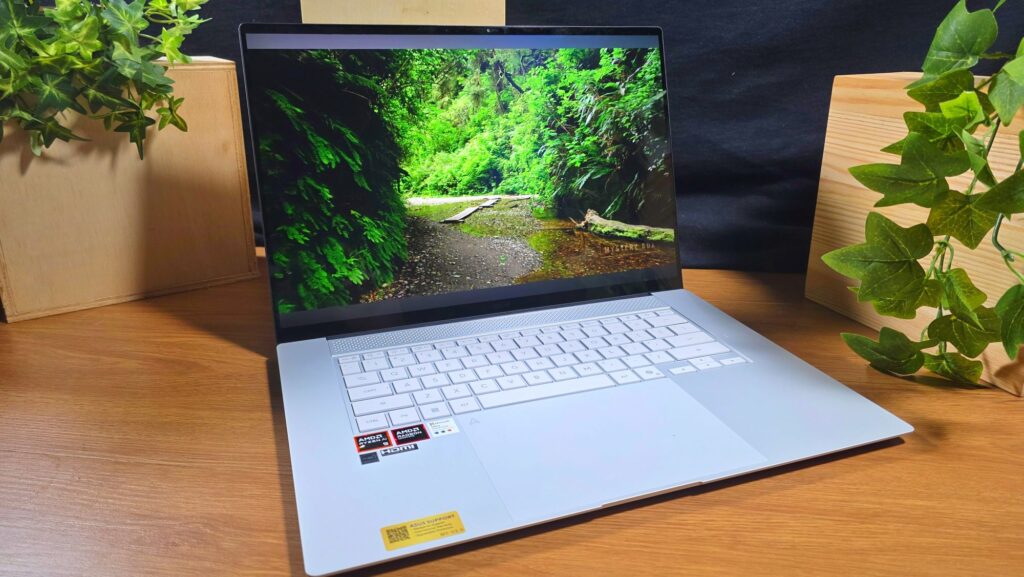
Asus Zenbook S16 Review (UM5606) 2026 – Revamped ultraportable takes to the field
The refreshed Asus Zenbook S16 aka model UM5606 that is now available in Malaysia comes with the latest AMD Ryzen AI 9 465 processor while keeping much of the hardware that made its 2024 predecessor one of the more powerful ultraportables in the market.
Asus Malaysia graciously loaned us a test unit and after putting it through its paces here’s our Asus Zenbook S16 review where we assess if it is worth its still substantial RM7,999 price tag.
Asus Zenbook S16 Review (UM5606) – Build and Design
Table of Contents
In terms of build and design, our Asus Zenbook S16 review sample aka model UM5606 for 2026 doesn’t differ all too much from its predecessor launched in 2024 which is a good thing seeing how posh they both look.
It also keeps to the same svelte dimensions and materials including a CNC all-metal chassis, measuring in at just 11mm thin at its thinnest point and weighing just 1.5kg which is light for a 16-inch ultraportable laptop of its size and dimensions. Port variety and placement are also near identical and cover the bases.
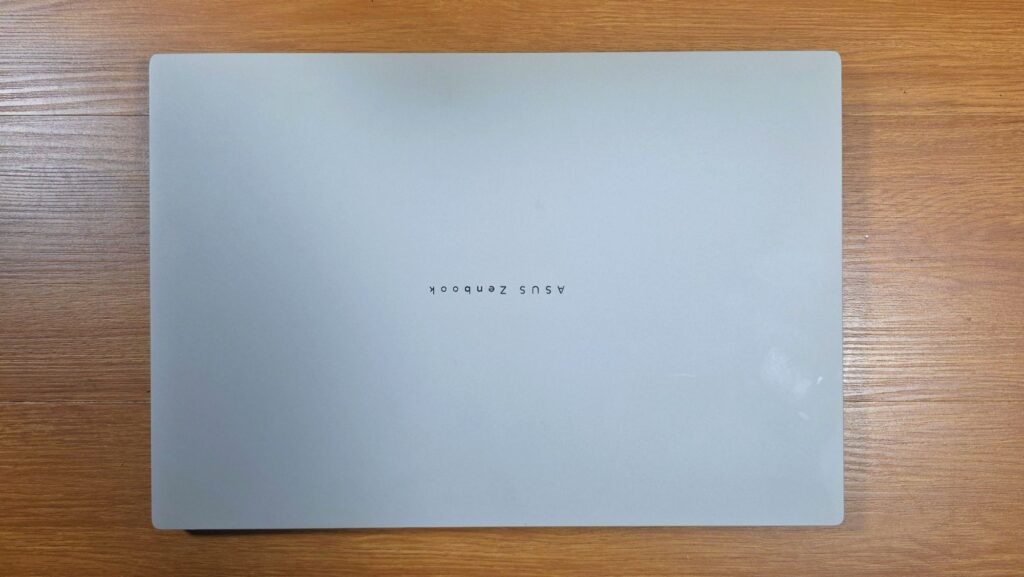
Up top, the laptop features an aluminium top lid coated in Asus’s own unique Ceraluminum finish that mimics some aspects of ceramic while offering a matte, fingerprint resistant finish with a moderate level of grippiness.
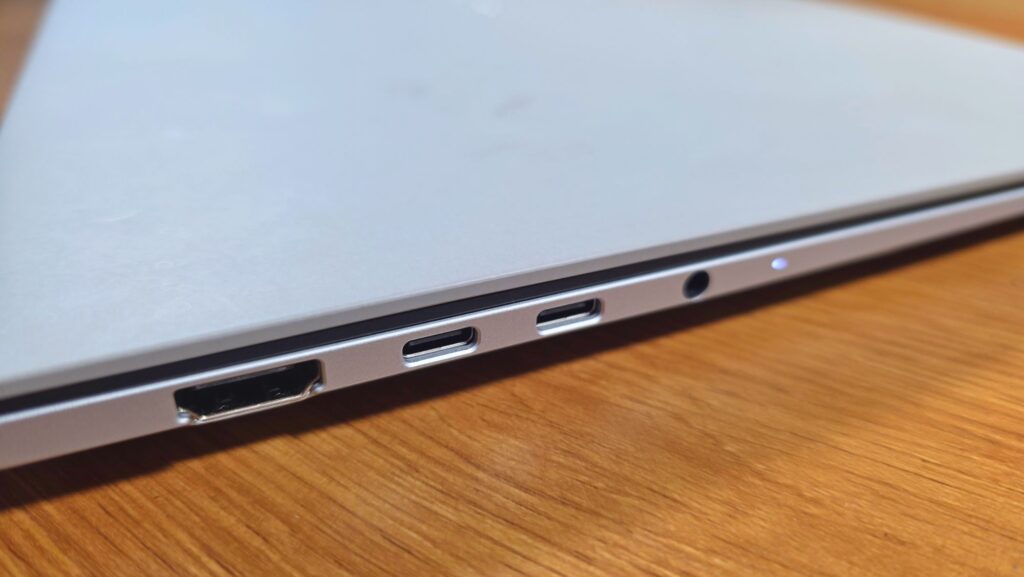
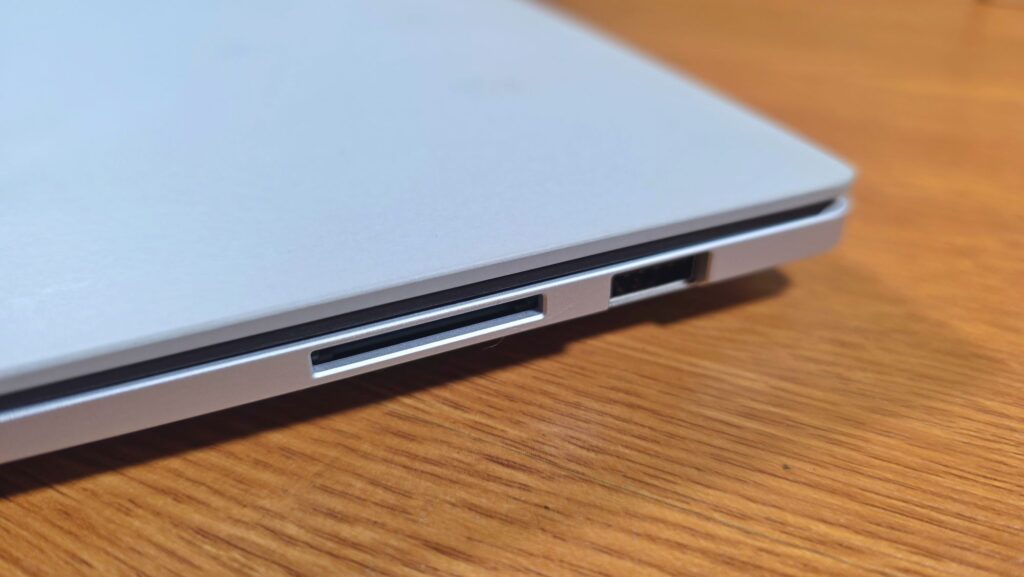
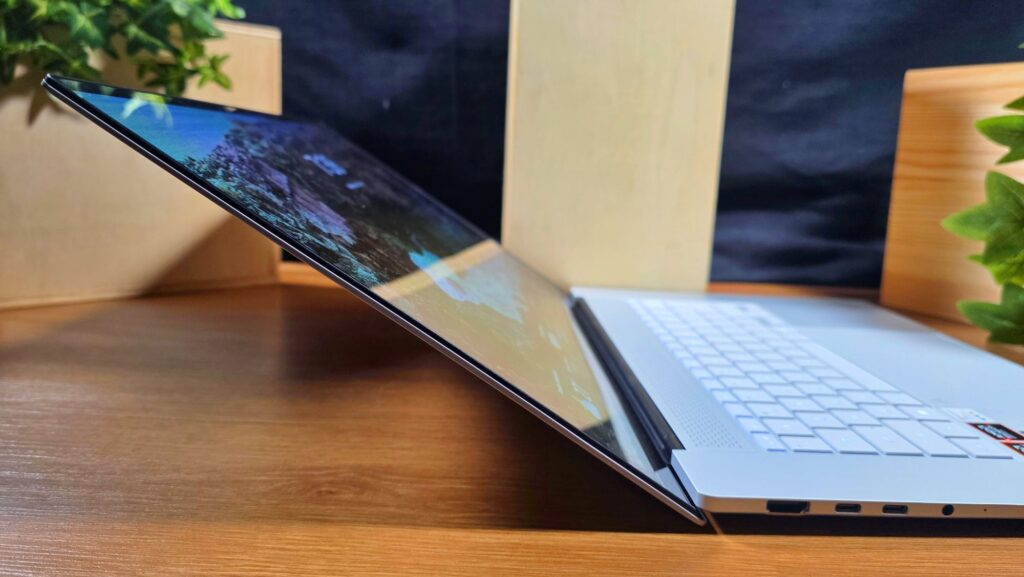
Port selection and placement is almost identical to its predecessor with the left side featuring a HDMI 2.1 (TMDS) port, two USB4 Type-C ports and a 3.5mm audio combo jack. The right side of the laptop comes with a single USB 3.2 Gen 2 Type-A port and an SD card reader which comes in especially handy for content creators.
The underside of our Asus Zenbook S16 review sample reveals a fairly conventional base made of the usual brushed aluminium seen in many other designs. It’s a bit of a stark contrast with the premium looking Ceralumin coated top lid but odds are you likely won’t be looking at the laptop’s underside all too often.
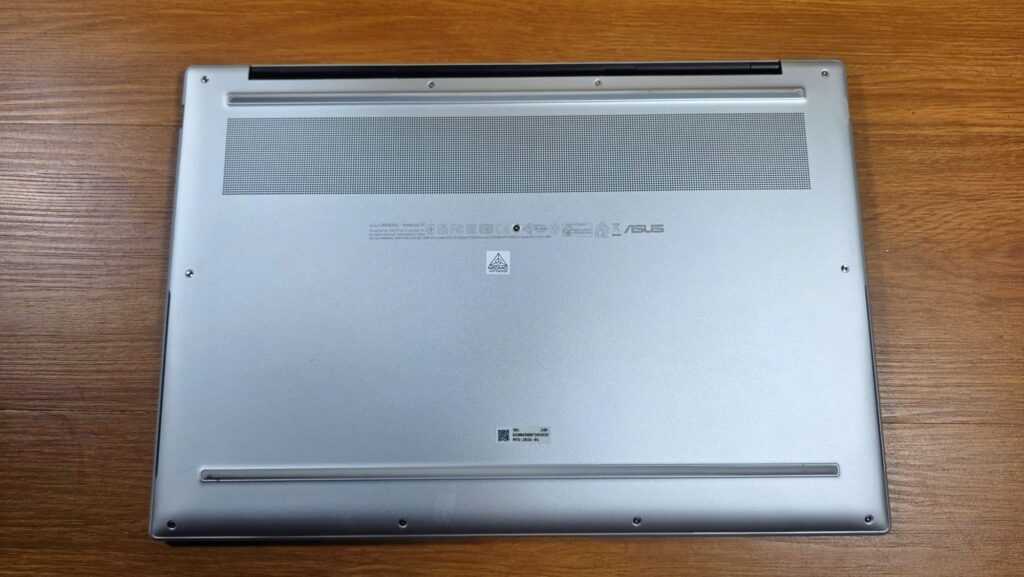
With two narrow grilles flanking its sides with each side featuring a pair of front-facing tweeters and two pairs of down-firing force-cancelling woofers, for a total of six drivers, all of which feature Dolby Atmos support. The underside also has a raised set of rubber feet running across lengthwise that elevate the chassis for better airflow.
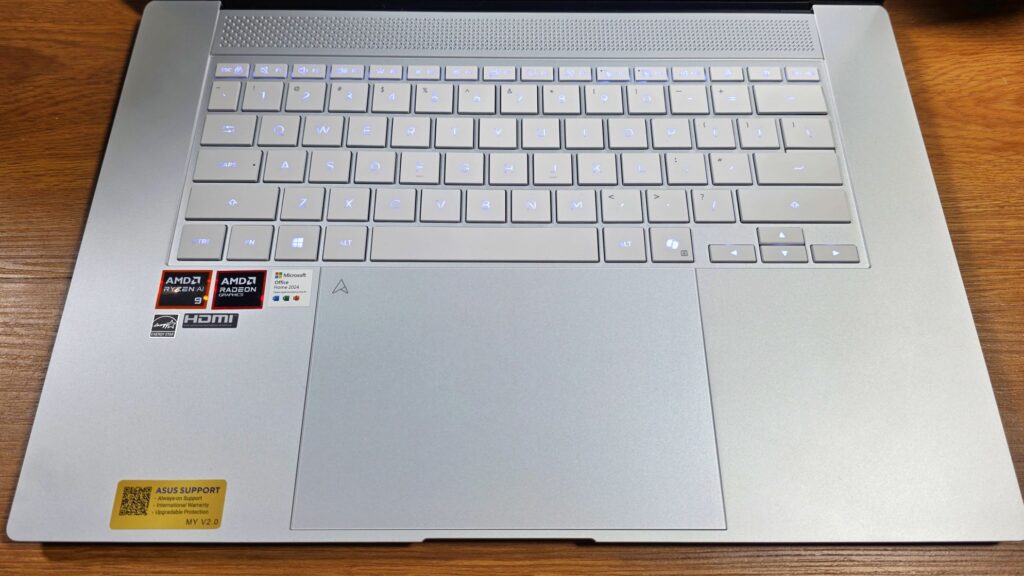
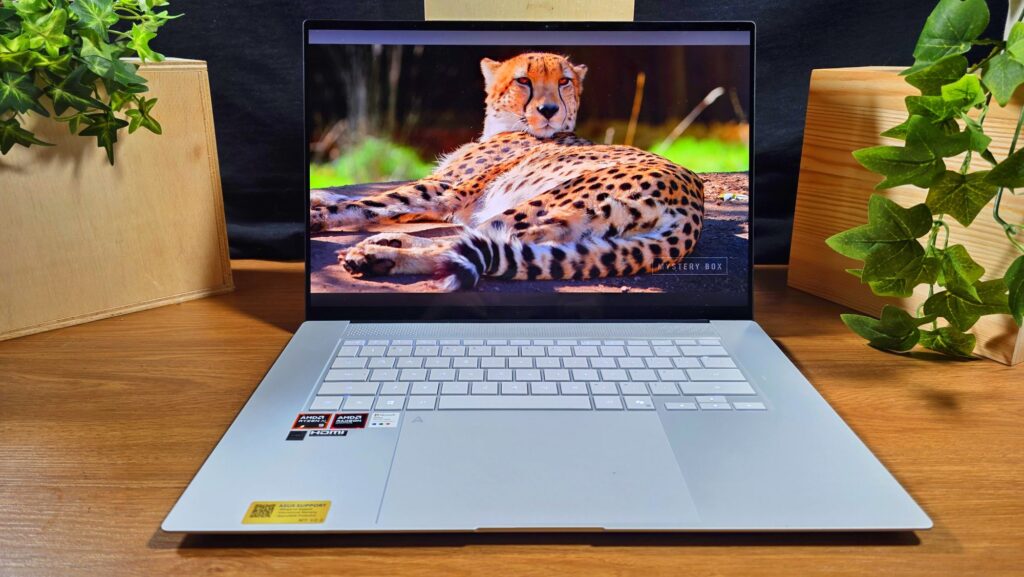
Flipping the lid of the laptop open was a smooth affair that can be done one-handed thanks to its smoothly engineered hinge, revealing a generously sized touchpad that takes up a good third of the keyboard tray with the rest of the keyboard done up in matte white keys with adjustable white backlighting and 1.1mm key travel. As par for the course, the keyboard also contains a Microsoft Copilot key to summon their AI assistant if needed. Like the top lid, the keyboard tray is also coated in Ceralumin to lend it a premium touch and feel.
The sheer size of the touchpad isn’t just for show and sliding your finger up and down its left side lets you control volume while doing so on its right edge lets you control screen brightness.
If you’re playing a video, sliding your finger on the uppermost edge of the touchpad lets you fast forward or rewind content. It would have been nice if they added more aggressive haptics to it to give a better indication that these controls are in use but it’s otherwise a brilliant and helpful addition to its design.
Up top is the main draw to the Zenbook S16 – its 16-inch 3K Lumina OLED touch display which has 2,880 x 1,800 pixels resolution, a 120Hz refresh rate, a 1,000,000:1 contrast ratio and a quoted 1,100 nits peak brightness. Astute readers will note that Asus has upgraded the display this time around; the 2024 model only maxed out at 500 nits peak brightness.
Of particular interest to content creators is the fact that the display offers 100% DCI-P3 colour gamut along with DisplayHDR 1000 True Black certification and Pantone validation too for accurate colour rendition. Perched up top is a single 1080P webcam and infrared camera combo for Windows Hello verification and video calls.
This time around, the brand has kept things to the basics and our Asus Zenbook S16 review sample only comes with a 68W Type-C charging brick and a laptop sleeve. While a stylus does exist, it’s not available for sale yet in the Malaysia market. However, the display supports any stylus that supports Microsoft Pen Protocol (MPP) 2.0 so there’s some level of versatility if you happen to have a spare one lying around.
Overall build quality is excellent. Not only does the laptop look and feel exceptionally premium with its slim dimensions and Ceraluminum finish, it’s also built rather tough too with a US MIL-STD 810H military-grade certification that rates the laptop to short drops of up to 100mm to the floor, survive shocks and extremes of temperature.
Asus Zenbook S16 Review (UM5606) – Performance and Benchmarks
The Asus Zenbook S16 (UM5606) is a refresh of the 2024 model, replacing the 12-core Ryzen AI 9 HX 370 with the newer 10-core Ryzen AI 9 465 that has 50 TOPS for AI tasks and has 28W TDP. Oddly, the older chip used in the 2024 model remains slightly more powerful on paper and pairs with stronger Radeon 890M graphics, while the newer model steps down to a slightly less powerful Radeon 880M.
While it resembles a cost-saving measure, Asus claims that swapping to the newer chipset is intended to better optimise the Zenbook S16 UM5606 for its intended role as an ultraportable for office productivity related tasks and for better battery efficiency.
The new Zenbook S16 still features several subtler improvements with the biggest being a 37% enlarged vapour chamber and a redesigned dual fan array for better heat dispersion.
Our Asus Zenbook S16 review sample also features 32GB LPDDR5X RAM and a 1TB SSD. The RAM is soldered in and there’s only one M.2 SSD slot so after-market upgrades aren’t a viable prospect. Keeping the laptop powered is an 83Whr lithium-polymer battery.
In Malaysia, Asus only ships the Zenbook S16 in the aforementioned configuration with a touch-capable display.
Here’s how our Asus Zenbook S16 review unit stacks up on paper:
| Price | RM7,999 |
| Display | 16-inch 3K (2,880 x 1,800 pixels) ASUS Lumina OLED NanoEdge touch display, 1,100 nits peak brightness, 100% DCI-P3, DisplayHDR 1000 True Black, 120Hz refresh rate |
| Processor | AMD Ryzen AI 9 465 |
| OS | WIndows 11 Home |
| Graphics | AMD Radeon 880M |
| Memory | 32GB LPDDR5X / 1TB PCIe 4.0 x4 NVMe M.2 SSD |
| Battery | 83Wh lithium-polymer battery w/ 68W Type-C adapter |
| Size/Weight | 353 x 243 x 11mm / 1.5kg |
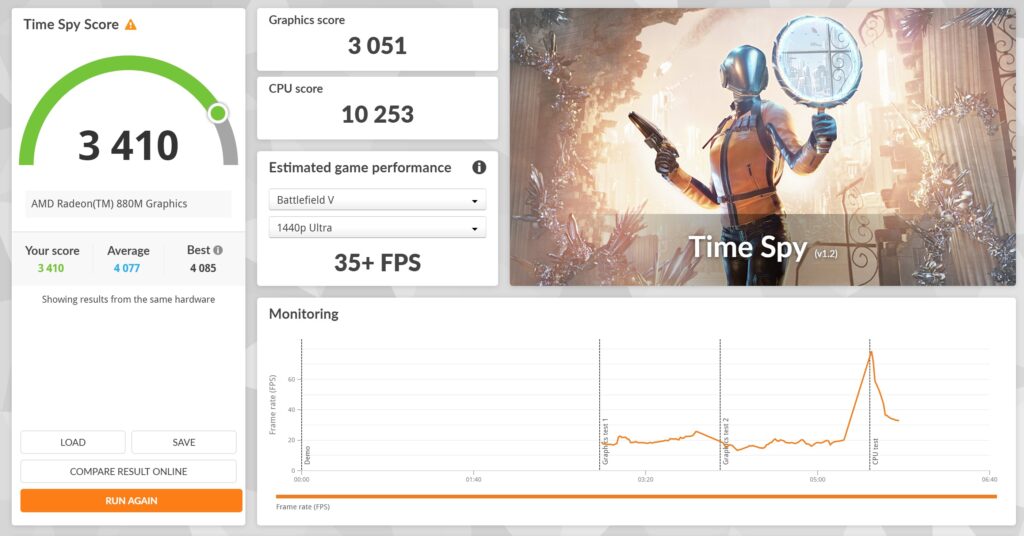
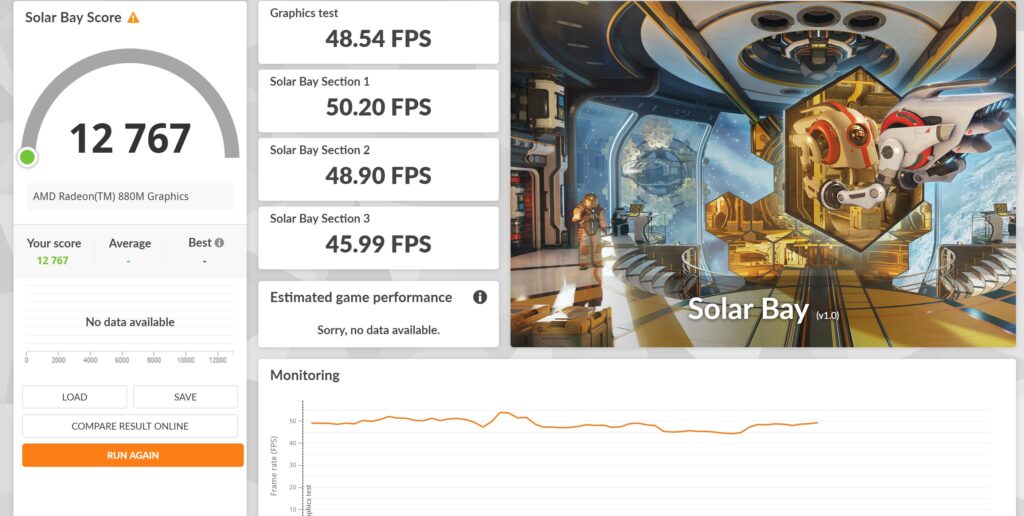
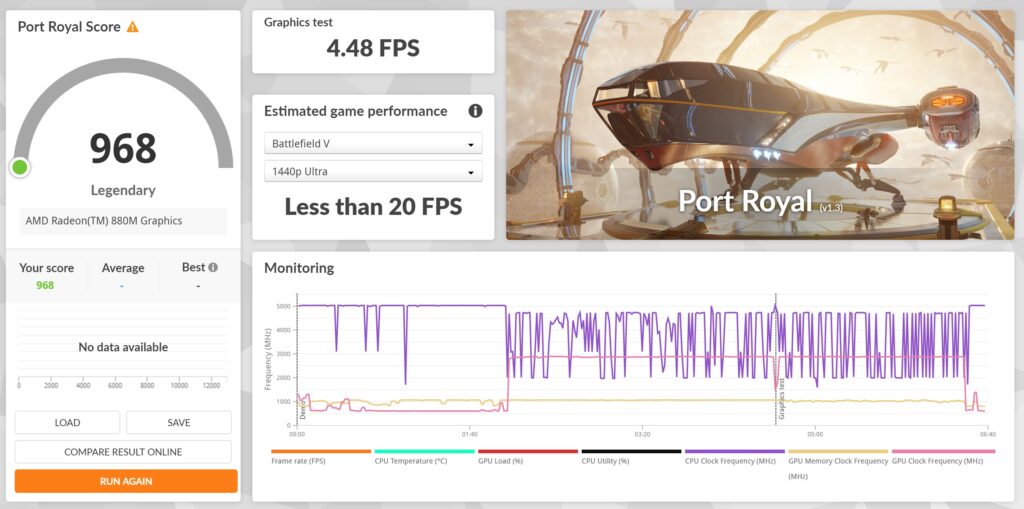
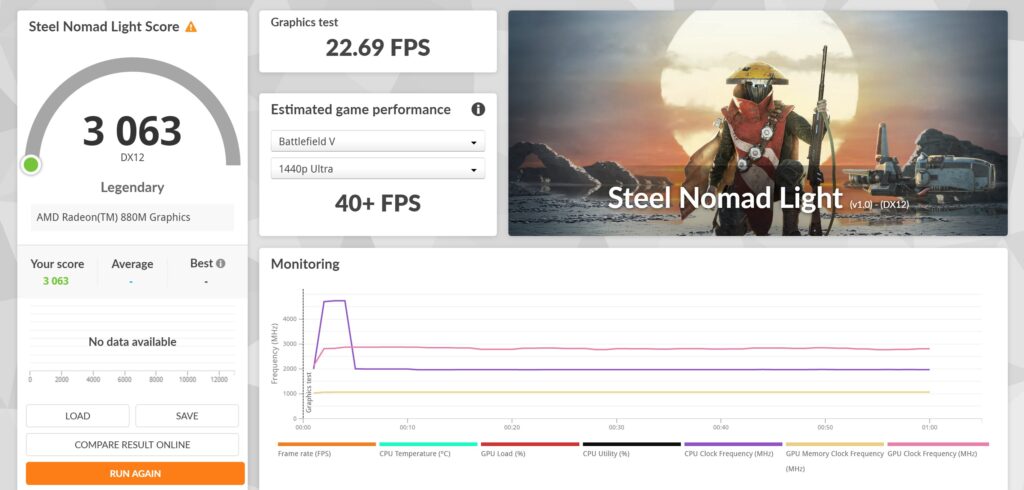
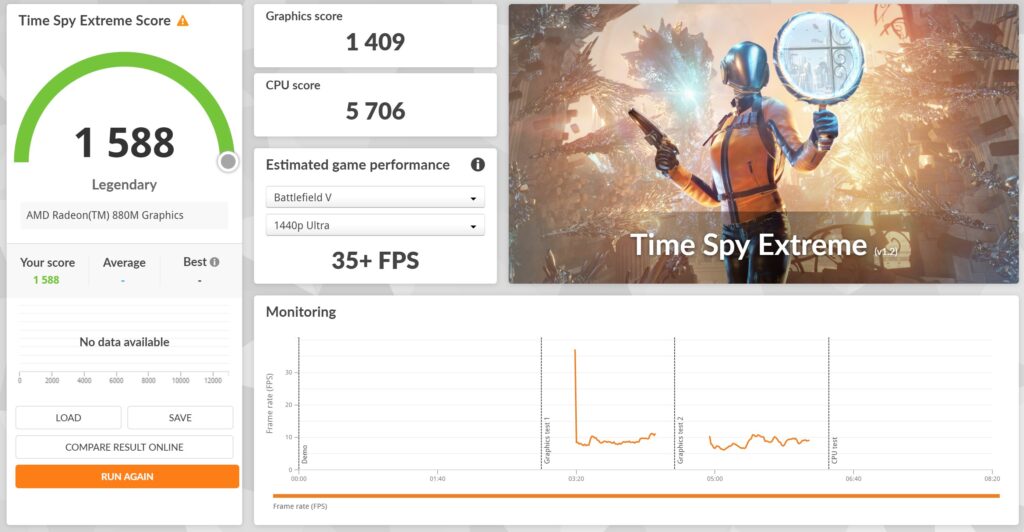
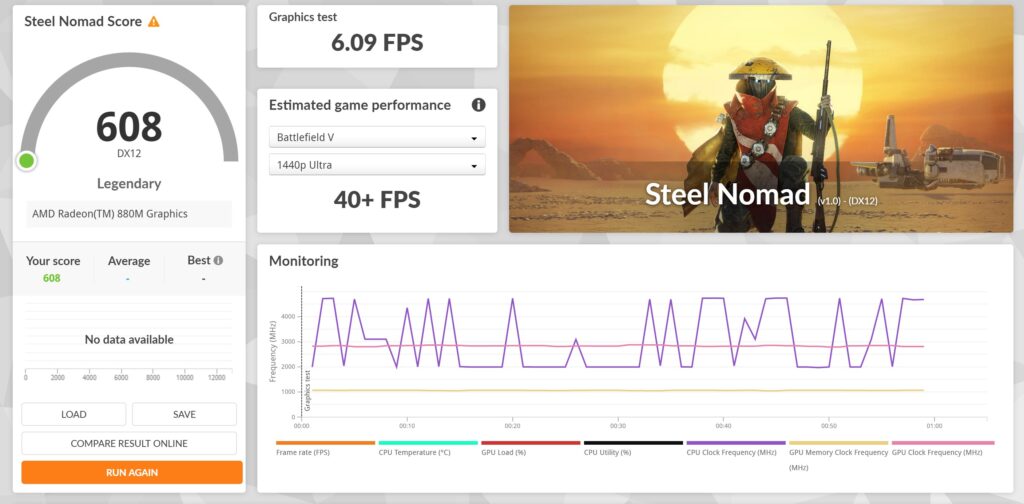
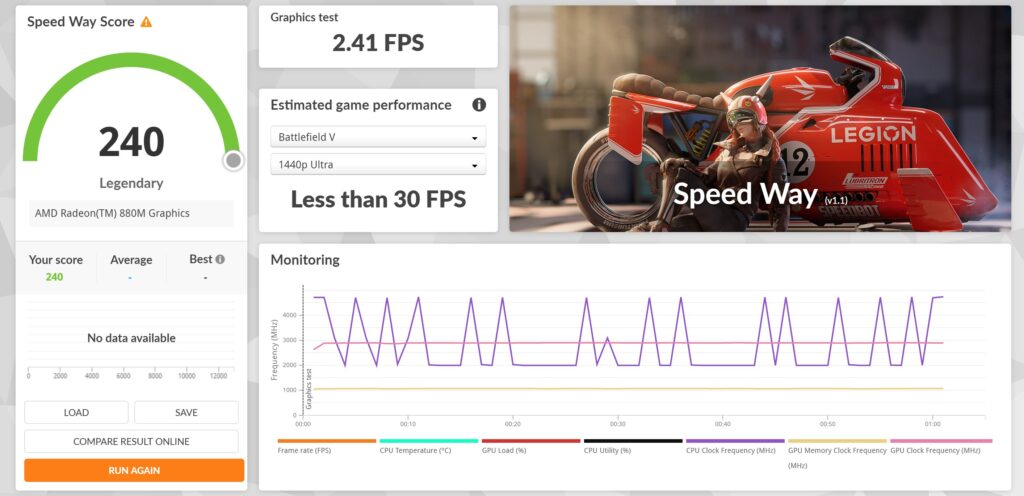
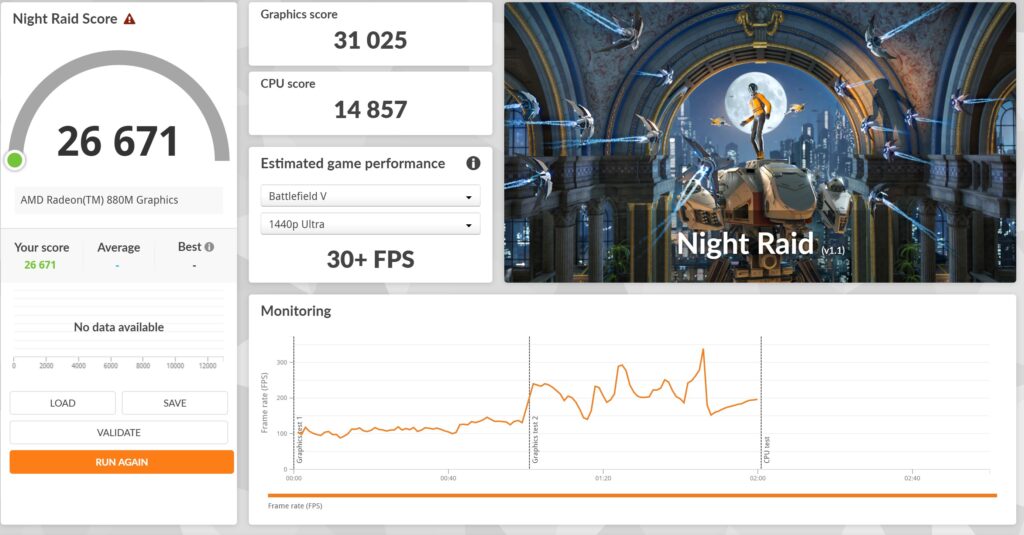
In terms of synthetic benchmarks, here’s how the 2026 model of the Zenbook S16 UM5606 scored when plugged in on default settings:
| 3D Mark Speed Way | 240 |
| 3D Mark Solar Bay | 12,767 |
| 3D Mark Steel Nomad | 608 |
| 3D Mark Steel Nomad Light | 3,063 |
| 3D Mark Port Royal | 968 |
| 3D Mark Night Raid | 26,671 |
| 3D Mark Time Spy Extreme | 1,588 |
| 3D Mark Time Spy | 3,410 |
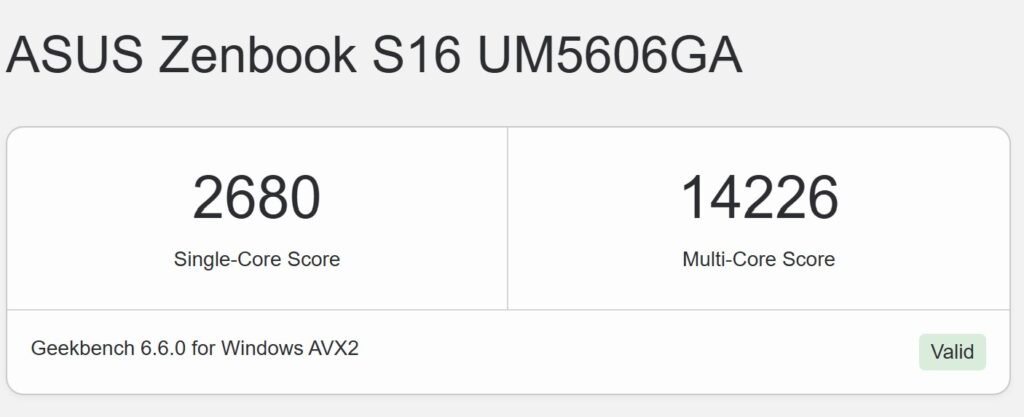
| Geekbench 6 Single Core | 2,680 |
| Geekbench 6 Multi Core | 14,226 |
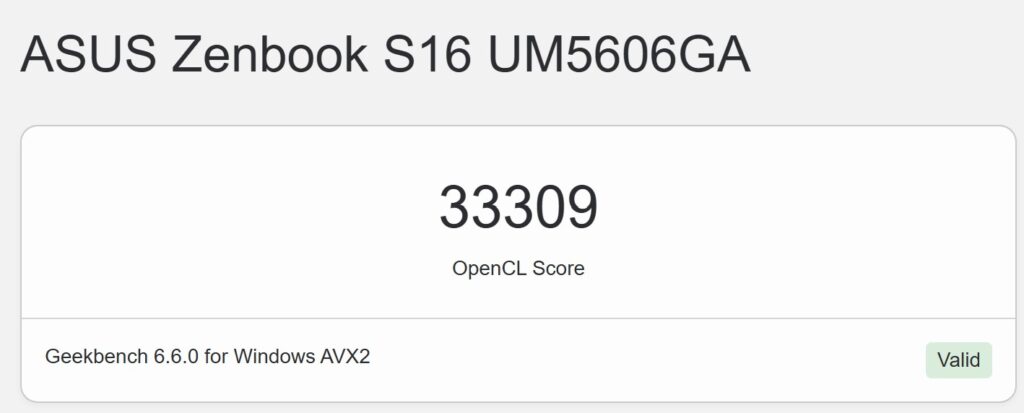
| Geekbench 6 OpenCL | 33,309 |
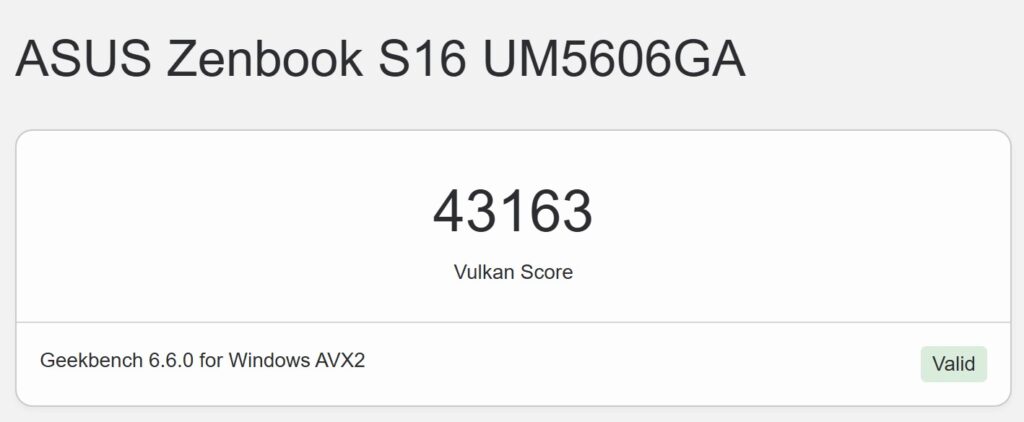
| Geekbench 6 Vulkan | 43,163 |
| Cinebench 2024 CPU (Multi core) | 693 |
| Cinebench 2024 GPU (Single Core) | 111 6/26x |
| PCMark 10 Work 3.0 Extended | 7,721 |
| 2160P Video Playback ( 50% brightness) | 11 hours 20 mins |
Intended as a processor for thin-and-light premium ultraportables, the AMD Ryzen AI 9 465 is a ten-core, 20-thread processor that hosts a quartet of Zen 5 5.0GHz cores and six Zen 5c cores clocked up to 3.3GHz that is rated for up to 50 TOPS for AI-related tasks and a default 28W TDP.
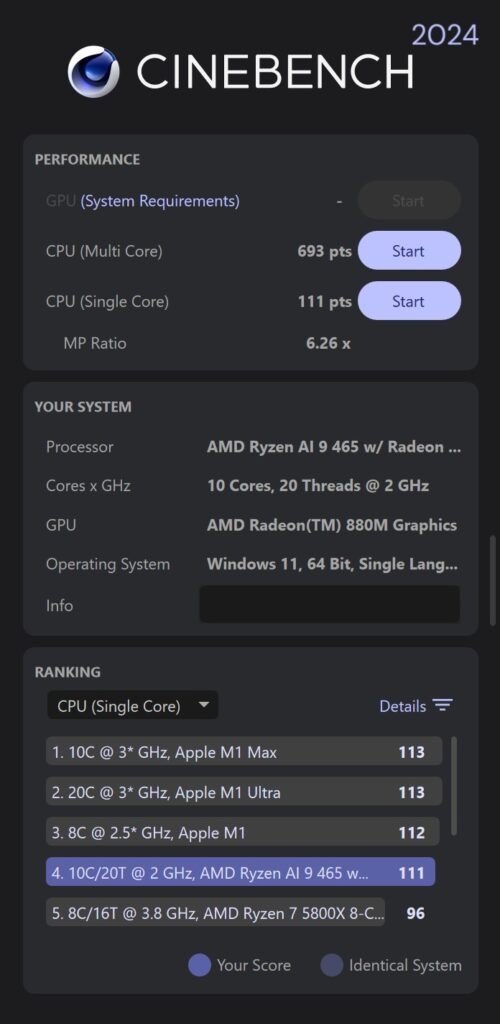
This lends it a performance profile best suited for general computing, spreadsheets, document processing, photo editing and modest video editing with Copilot+ AI support to tackle queries, ideation and the like.
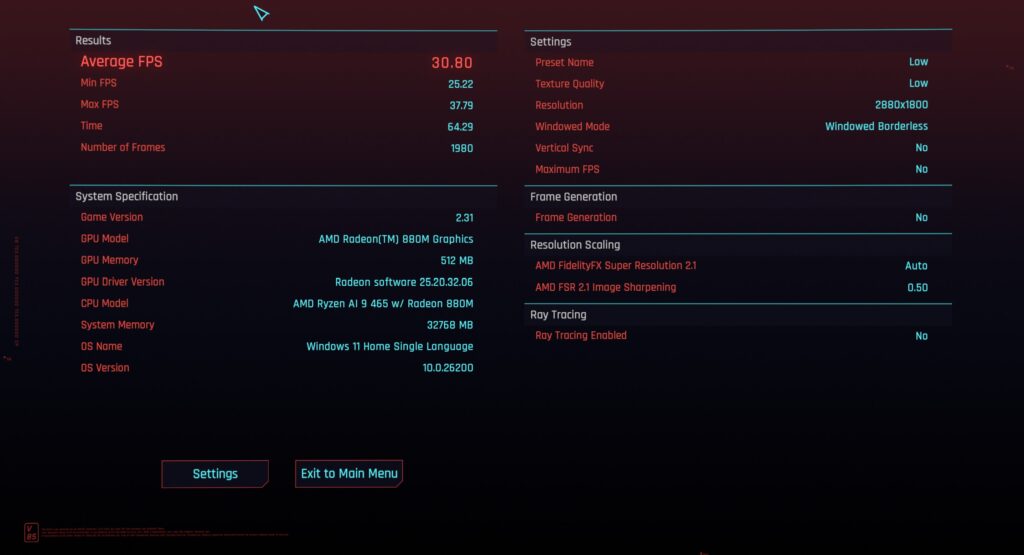
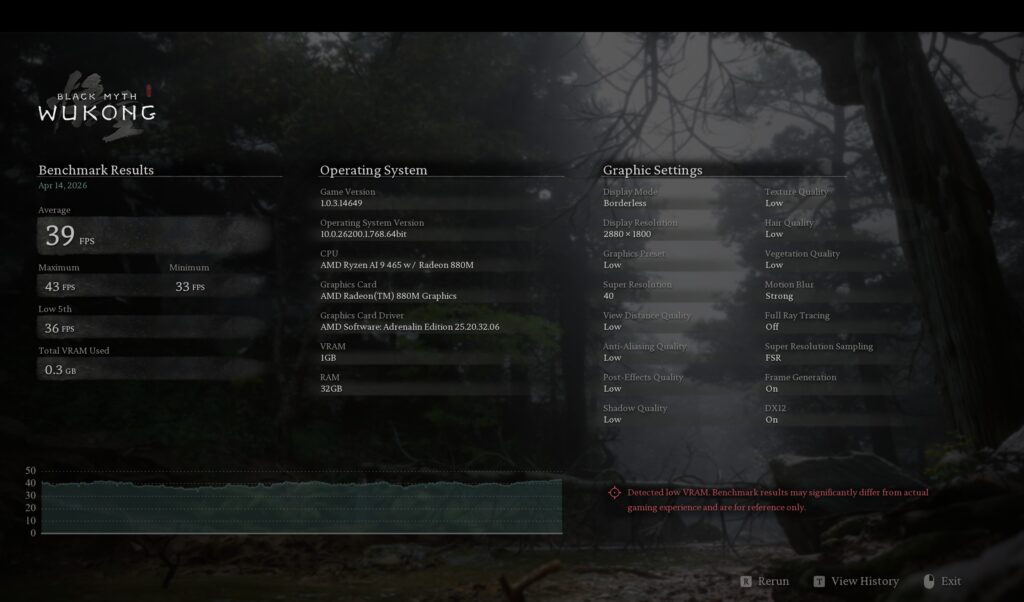
While it isn’t intended for gaming, it was able to handle some level of gaming like Black Myth Wukong on low settings which offered an average 39fps in benchmarks. In Cyberpunk 2077, it was able to offer an average of 30.08 fps on Low settings with ray tracing off.
Under practical field conditions, our Asus Zenbook S16 review unit performed in an admirable fashion as an ultraportable for everyday use. For testing, the laptop was brought along on a daily basis for work in the office as well as a variety of offsite locations ranging from client offices and events along with work meetings and catch-ups in coffee shops.
Not all of these locations offered easy access to a plug point for charging but the Zenbook S16 was able to comfortably offer all-day use throughout a working day with a combination of WiFi, web browsing and paperwork with a bit of juice left to catch up on some YouTube shows on the commute back.
In battery life tests, the laptop was able to run 2160p video on a loop with WiFi on and at about 50% screen brightness for about 11 hours and 20 minutes which is rather respectable, more so for the large 16-inch display.
The improved 1,000 nits screen brightness made it easier to see under indirect sunlight conditions such as near a window in the daytime and the touch panel proved responsive even with gentle tapping while also offering vibrant colour rendition and pin-sharp text.
The provision of Pantone validation as well as 100% DCI-P3 colour gamut also came in handy for editing videos and photos which came in handy especially when editing videos in CapCut. The display also made catching up on the Netflix backlog a pleasant affair even when on the go.
On the audio front, the six speakers on the flanks of our Asus Zenbook S16 review sample offered up good detail and a fair bit of sound staging for movies which is surprising seeing its slim dimensions though bass and lows were middling at best.
When listening to the usual music playlist, the laptop managed to handle a variety of genres well from pop to classical music while also being able to be dialled up loud enough to fill a small room with sound. With the full-sized HDMI port, it’s a surprisingly capable choice for presentations.
Should you buy the Asus Zenbook S16 UM5606 for 2026?
If you already own the 2024 model, there’s not much point to owning the newer model tested here unless you prioritise longer battery life and a brighter display.

For others who seek a capable ultraportable with a large touch display, excellent battery life and capable performance for heavy productivity, the Asus Zenbook S16 UM5606 comes recommended, more so for the fact that Asus has managed the feat of keeping the price down 2024 levels even with soaring prices for storage and RAM with few sacrifices.
Asus Zenbook S16 review sample courtesy of Asus Malaysia. For more details please visit https://www.asus.com/my/laptops/for-home/zenbook/asus-zenbook-s-16-um5606/
Asus Zenbook S16 Review (UM5606) 2026
-
Display
-
Performance
-
Battery Life
-
Design
-
AI Capabilities
-
Value
Asus Zenbook S16 Review (UM5606) 2026
For others who seek a capable ultraportable with a large touch display, excellent battery life and capable performance for heavy productivity, the Asus Zenbook S16 UM5606 comes recommended, more so for the fact that Asus has managed the feat of keeping the price down 2024 levels even with soaring prices for storage and RAM with few sacrifices.
Pros
Premium Ceraluminum finish
Good battery life
Brighter OLED touch display
Generous amount of RAM and storage
Cons
Rather pricey
Revamped chipset isn’t as powerful as 2024 model
Doesn’t ship with stylus for local models