
Xiaomi 17 Review – Compact Flagship Delight
The successor to the Xiaomi 15 released last year, the Xiaomi 17 is a phone that aims to cram in as much flagship-grade hardware as possible in as compact a form factor as possible but does it succeed? We took a sample for an extensive field test that included the harrowing gauntlet that is Computex Taiwan – here’s our Xiaomi 17 review where we share if this sleek and petite phone is worth what you pay for!
Xiaomi 17 Review – Build and Design
Table of Contents
When compared side by side to the Xiaomi 15 released last year, our Xiaomi 17 review sample retains the same approximate dimensions but is slightly thinner, wider and shorter in the bargain while enjoying a slight increase in weight by 2g at 191g. The Xiaomi 17 also gets a slightly smaller display by 0.06-inches but its hardly discernible unless you bring out the measuring tapes.
Other modest differences include the obligatory chipset update to the latest Qualcomm Snapdragon 8 Elite Gen 5, an improved selfie camera that’s been upgunned to a 50MP model over 32MP from last year and, most important of all, a much larger 6,330mAh battery for improved endurance in the field.
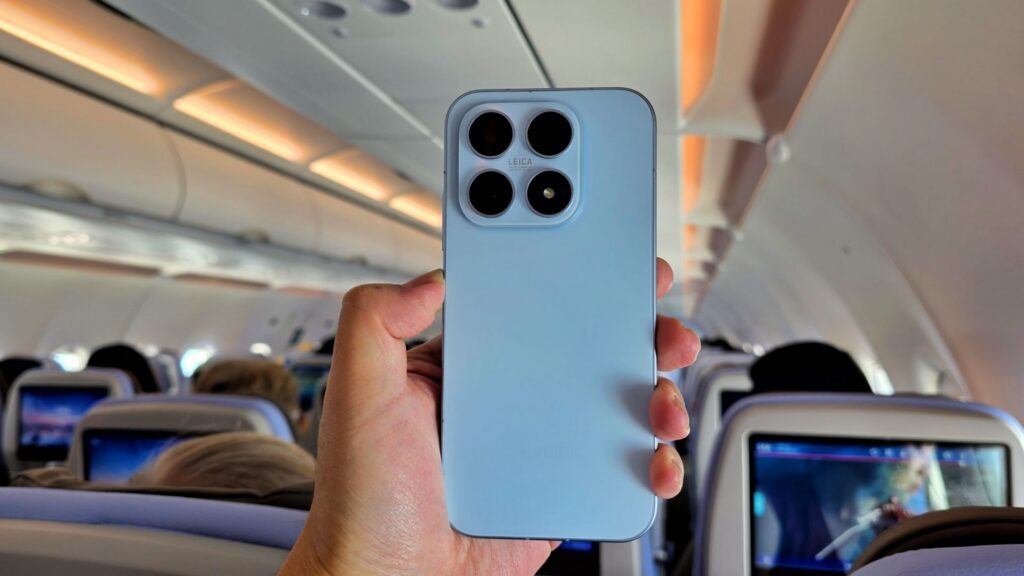
Beyond this, the biggest Xiaomi 17 retains the design language with a flat display and equally flat backplate as well as rounded corners. Where it visually differs is its rear triple camera housing and LED flash which are all individually protected by separate housings on a raised island. The older Xiaomi 15 paves it all under a slab of squared glass with an otherwise black-finished camera island.
In addition to the camera housing perched in the upper left corner, the lower quadrant of the backplate has a wireless charging coil that supports 50W wireless charging. When viewed up close, the Ice Blue finish on our Xiaomi 17 review sample works out to a light metallic blue finish that resists fingerprints and has an understated yet classy look.
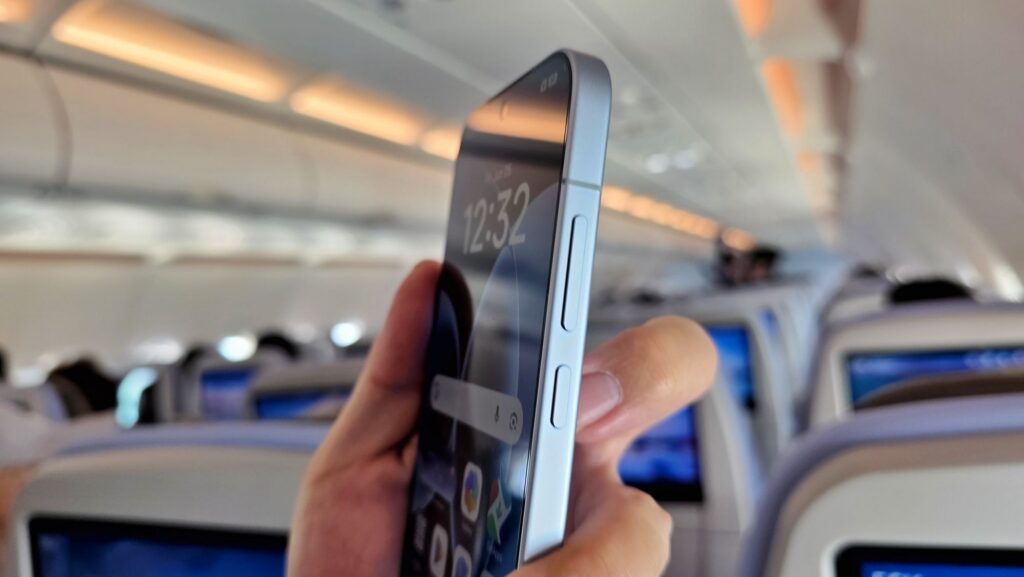
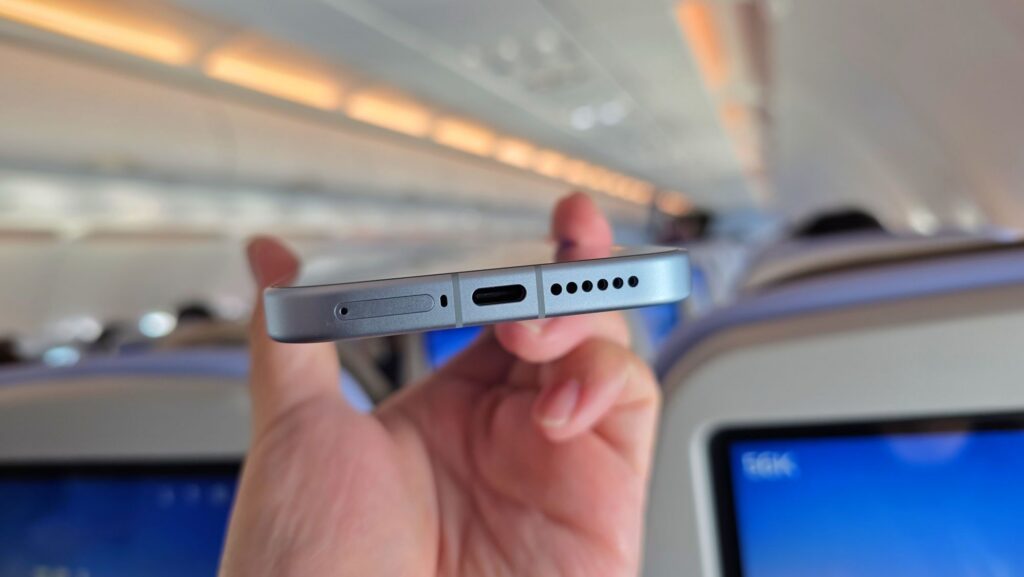
The right side hosts a power button and volume rocker while the left and top sides are otherwise unremarkable. The base hosts a single USB-C port for charging and docking duties along with a grille for one of the two speakers.
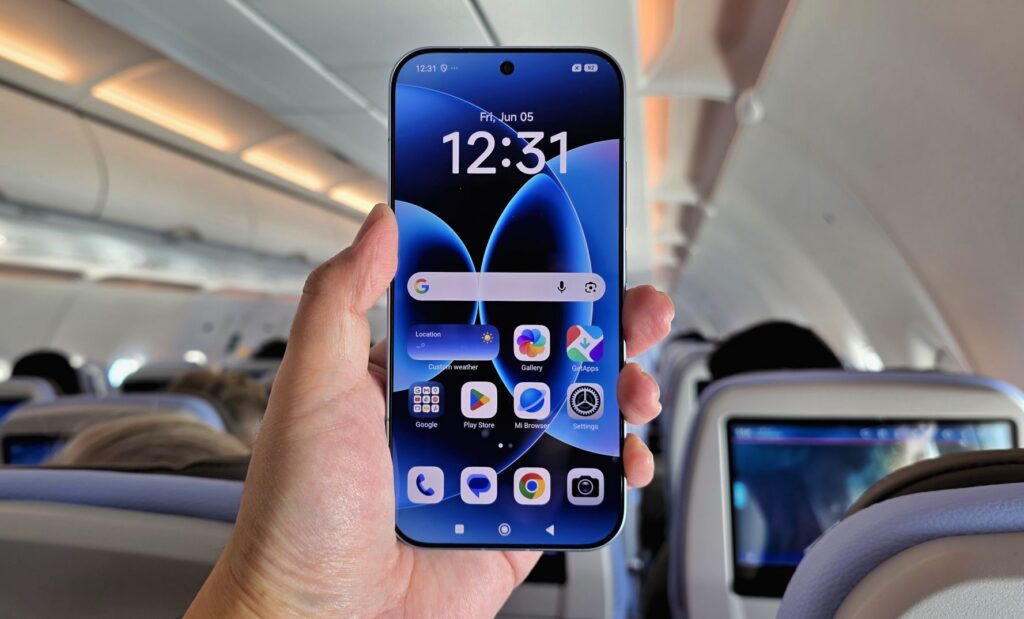
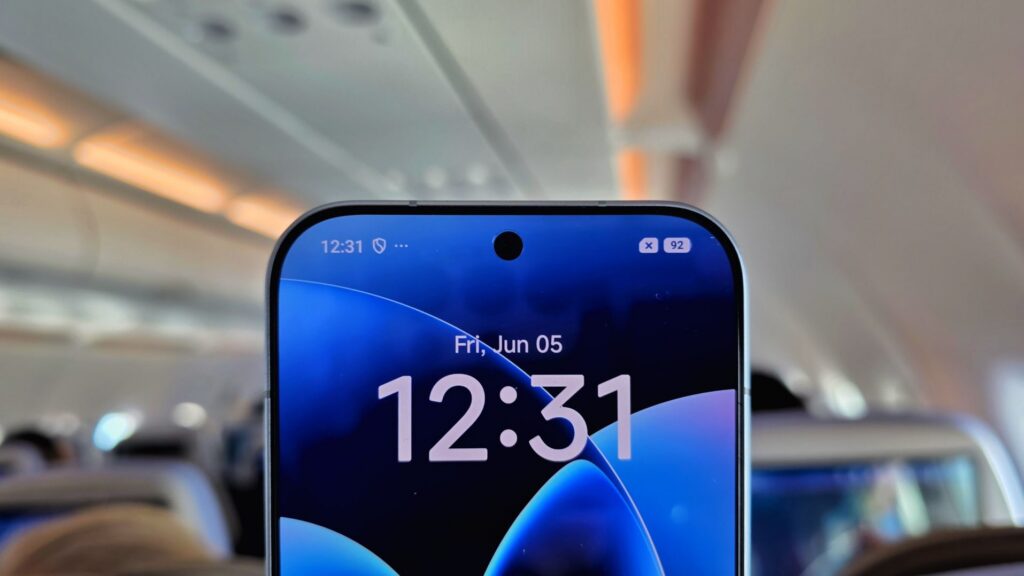
Up front, our Xiaomi 17 review sample features a 6.3-inch AMOLED display with 1,220 x 2,656 pixels resolution, a smooth 120Hz refresh rate and up to 3,500 nits peak brightness. The top features a punch hole for a single 50MP f/2.2 selfie camera which is substantially more than many competing flagship phones with the bottom quadrant of the display hosting an ultrasonic fingerprint reader.
Keeping the screen protected is a slab of Xiaomi Shield Glass though how it compares to the usual Corning Gorilla Glass in terms of scratch or damage resistance hasn’t been stated in official literature though the screen has not suffered any scratches or nicks during our time testing it over the course of several weeks.
Build quality is exceptional with the phone offering an even heft and excellent tactility especially when held one-handed. Even better, the Xiaomi 17 is rated for IP68 dust and water resistance in keeping with many other flagship phones.
For units in Malaysia, Xiaomi has added a free protective casing on top of the obligatory USB-C cable and SIM eject pin. A charger that could take advantage of its fast 100W charging would have been welcome but it’s not a deal breaker.
Xiaomi 17 Review – Performance and Benchmarks
In terms of hardware, our Xiaomi 17 review unit is impressively equipped with the top of the line Qualcomm Snapdragon 8 Elite Gen 5 processor that is effectively the best chipset you can cram in a phone for 2026.
Xiaomi hasn’t skimped where it counts and uses fast 12GB LPDDR5X RAM and 512GB of fast UFS 4.1 storage for our test unit. A more affordable variant is also available with 12GB RAM and 256GB of storage for RM300 less. Running under the hood is Android 16 paired with HyperOS 3.0.
On paper, Xiaomi vouchers for five years of OS and six years of HyperOS updates which isn’t the longest in the industry but is respectable, all things considered.
Here’s how our Xiaomi 17 review sample stacks up on paper:
| Price | RM3,499 (12GB RAM/512GB) RM3,199 (12GB RAM/256GB) |
| Display | 6.3-inch CrystalRes LTPO AMOLED, 1,220 x 2,656 pixels, 120Hz refresh rate, 3,500 nits peak brightness |
| Processor | Snapdragon 8 Elite Gen 5 |
| OS | Android 16 w/ HyperOS 3 |
| Memory | 12GB RAM/ 512GB (review sample), 12GB RAM/256GB variant available |
| Cameras | 50MP f/1.67 Leica main camera w/ Light Fusion 950 image sensor and OIS, 50MP f/2.0 Leica telephoto w/ OIS, 50MP f/2.4 Leica ultra wide camera [rear] / 50MP f/2.2 autofocus camera [front] |
| Battery | 6,330mAh w/ 100W wired and 50W wireless HyperCharge |
| Size/Weight | 151.1 x 71.8 x 8.1mm /191g |
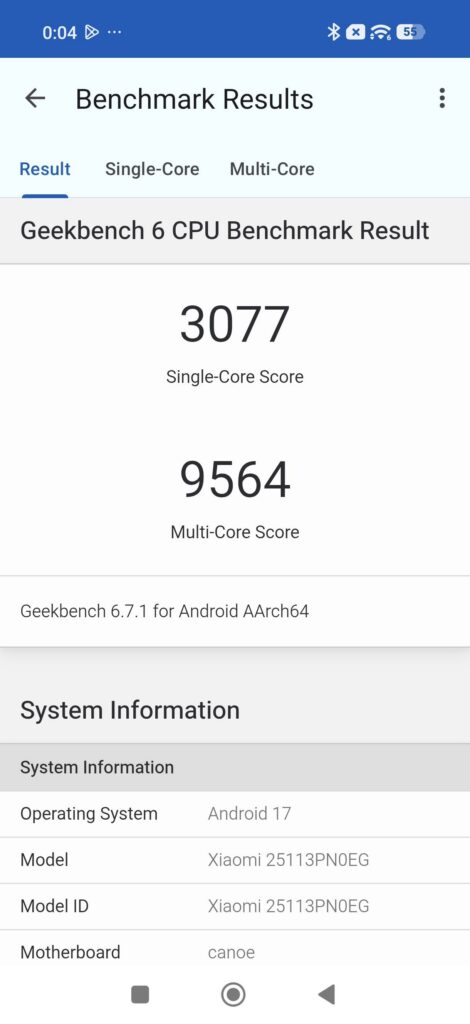
Like many other flagship phones, the Xiaomi 17 allows you to assign up to 12GB of virtual RAM via its Memory Extension feature in HyperOS 3.0 with 6GB assigned as stock though you can downgrade it to 4GB or turn it off entirely. When set to the default 6GB virtual RAM, our Xiaomi 17 review sample got the following synthetic benchmarks:
| 3D Mark Steel Nomad Light | 2,143 |
| 3D Mark Steel Nomad Light Unlimited | 1,974 |
| 3D Mark Solar Bay | 9,571 |
| 3D Mark Solar Bay Unlimited | 9,103 |
| 3D Mark Solar Bay Extreme | 997 |
| 3D Mark Solar Bay Extreme Unlimited | 925 |
| 3D Mark Wild Life Extreme | 5,820 |
| 3D Mark Wild Life Extreme Unlimited | 5,496 |
| Geekbench 6 Single core | 3,077 |
| Geekbench 6 Multi core | 9,564 |
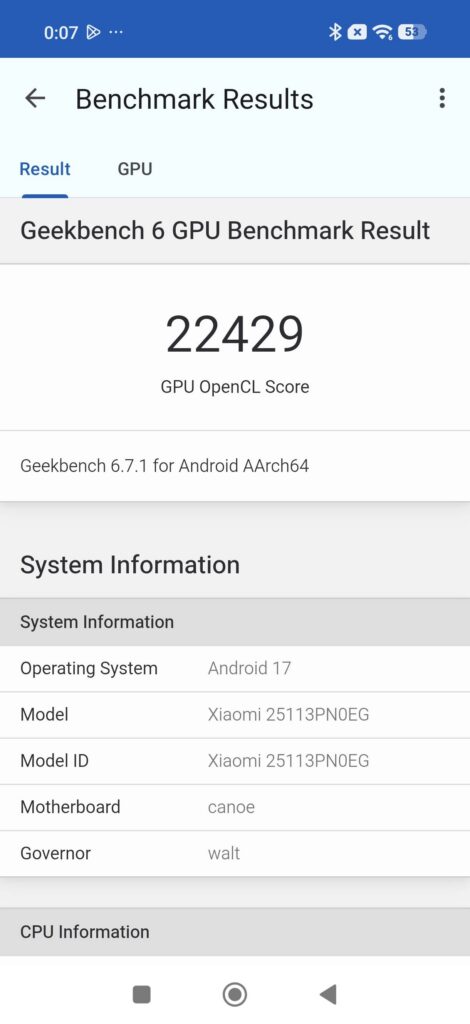
| Geekbench 6 OpenCL | 22,429 |
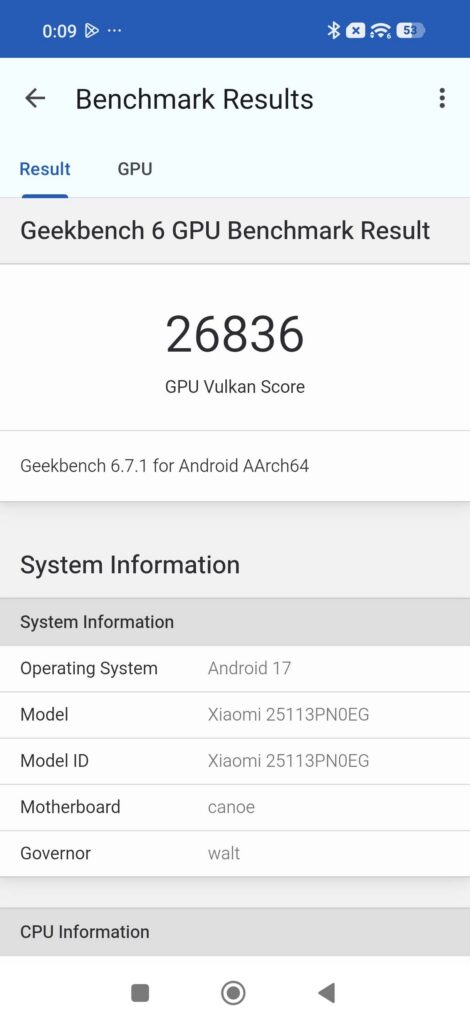
| Geekbench 6 Vulkan | 26,836 |
| Geekbench AI (CPU) | 4,482 |
| Geekbench AI (GPU) | 3,043 |
| PCMark Work 3.0 | 16,658 |
| PC Mark Work 3.1 Battery Life | 15 hours 53 mins |
In terms of synthetic benchmarks, our Xiaomi 17 review unit performed comparably to other devices that also utilise the Snapdragon 8 Elite Gen 5 chipset.
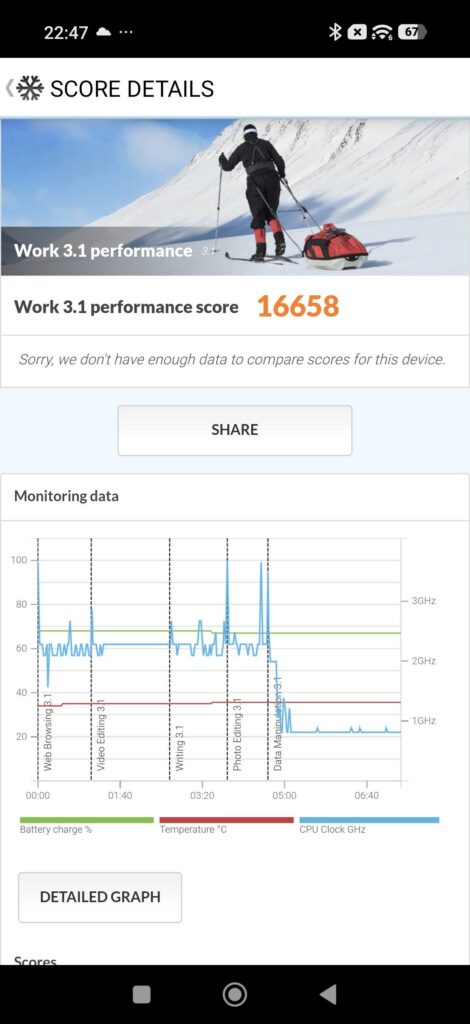
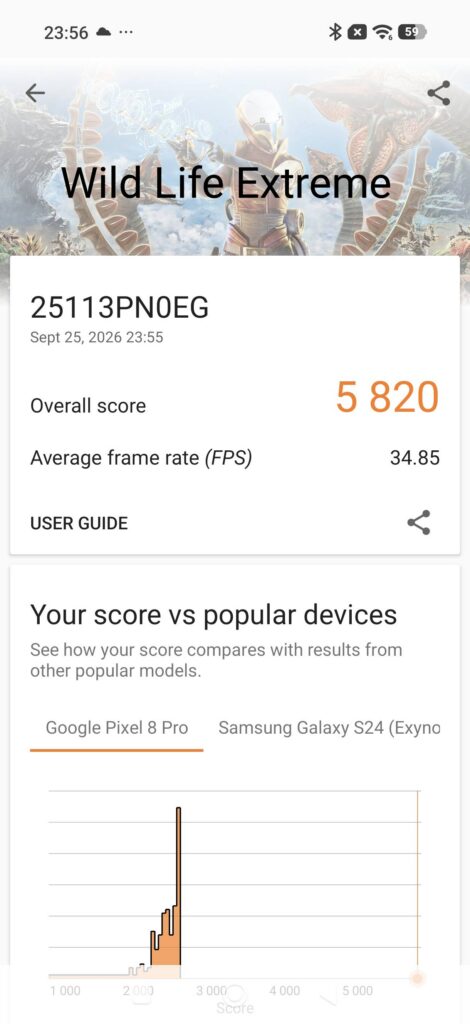
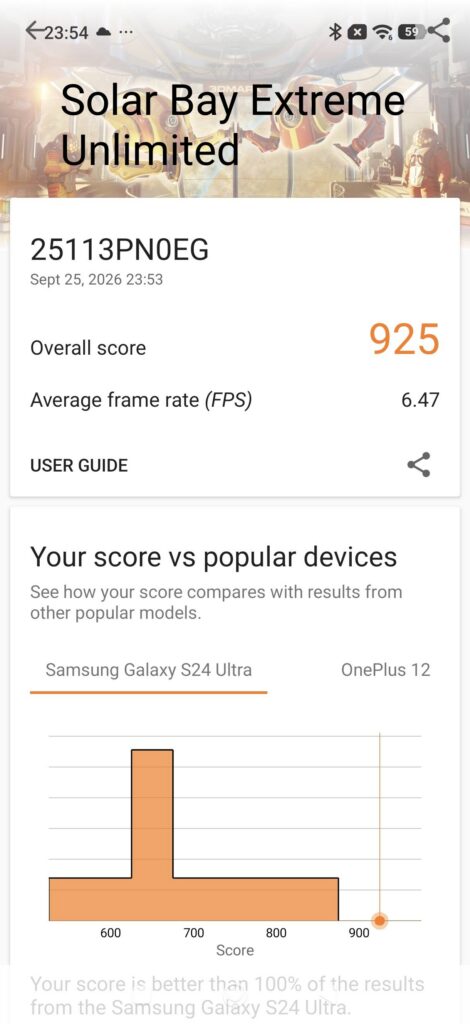
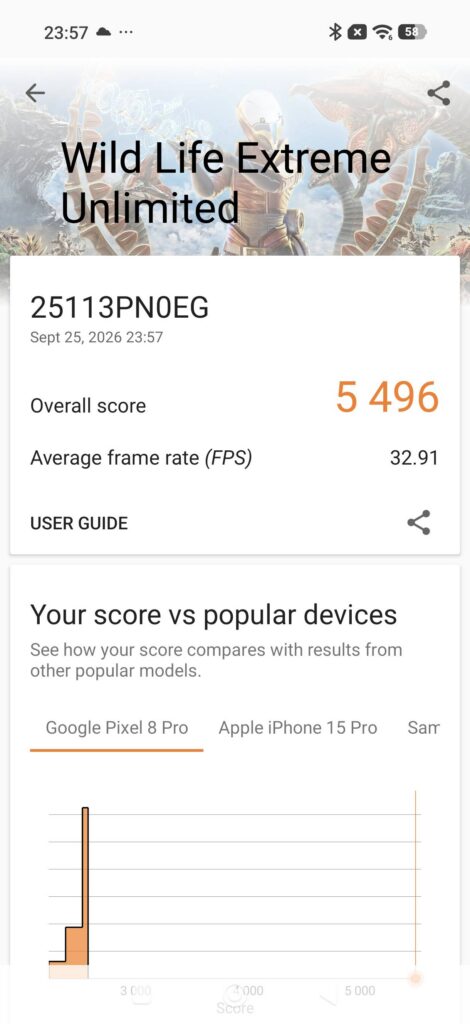
There is some minor variation in scores depending on how much virtual RAM Extended memory you assign with the base 6GB RAM offering more than capable performance.
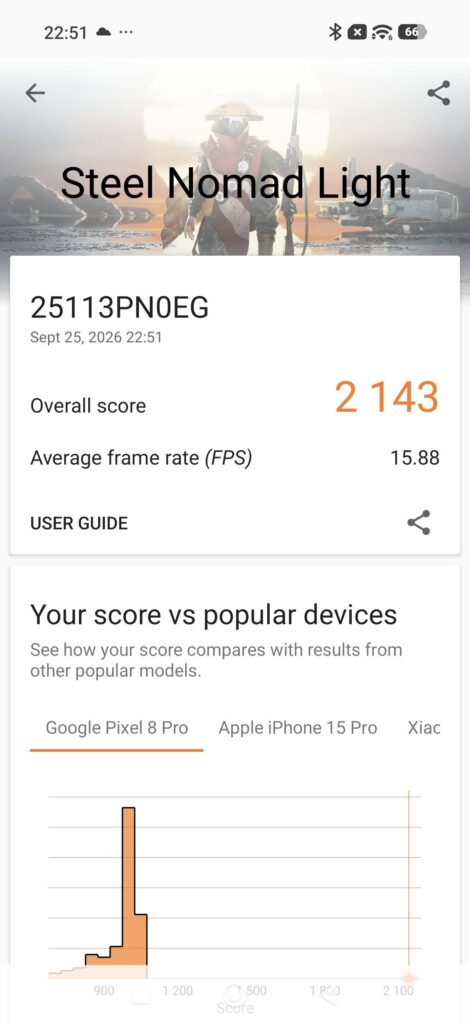
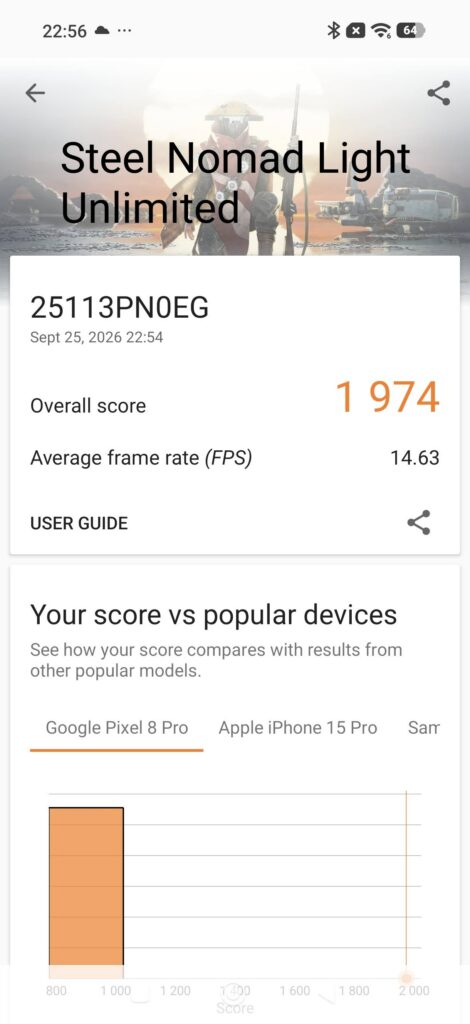
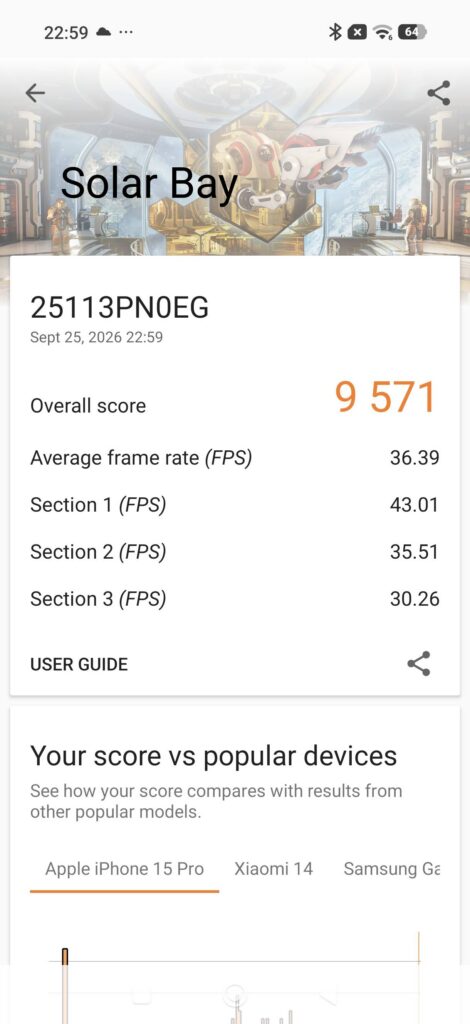
In practical terms, the Xiaomi 17 is every bit a flagship phone and is able to tackle everything asked of it from heavy editing in CapCut to heavy gaming with smooth results even at high settings in the usual like Call of Duty Mobile, Genshin Impact and Wuthering Waves. Needless to say, it blazes through conventional tasks like word processing and web browsing in a silky smooth fashion.
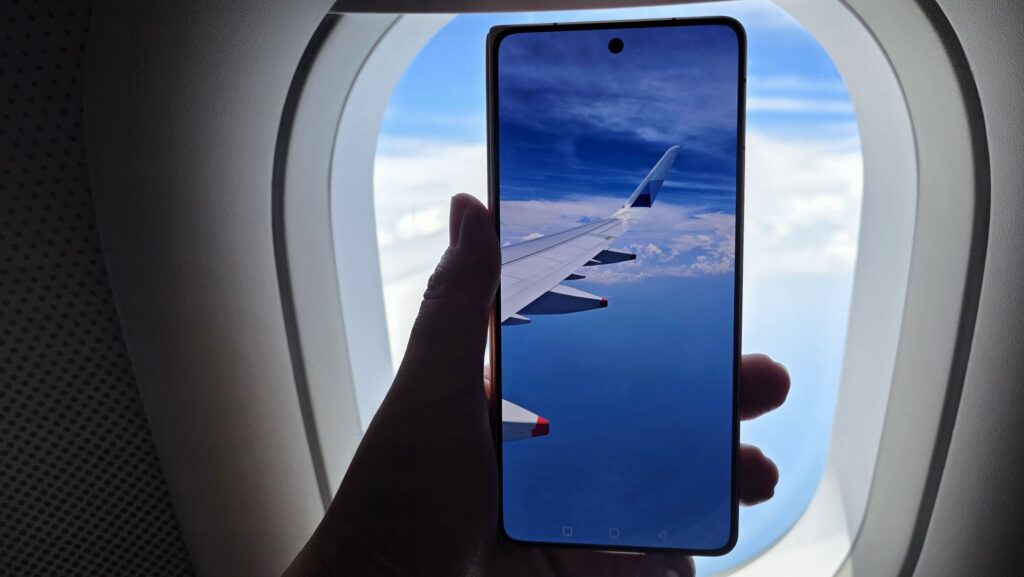
The Xiaomi 17 features a compact 6.3-inch CrystalRes LTPO OLED display with 1,220 x 2,656 resolution, the ability to dial its refresh rate between 1-120Hz for better power e base and another set in the earpiece just above the display. Combined, both offer good detail with competently balanced mids and highs and the speakers can comfortably be maxed out without distortion. Bass isn’t stellar but that’s to be expected in such a compact form factor.
Belying its compact dimensions, the Xiaomi 17 has a massive 6,330mAh that is considerably larger than some larger sized competing flagships. The combination of a compact and power efficient 6.3-inch LTPO AMOLED display and the large battery allow for comfortable all-day performance.
With a full battery, our Xiaomi 17 review unit with a combination of data and WiFi throughout the day was able to handle a full day of heavy use – several minutes of voice calls, all-day texting and social media, several sessions on Clash Royale and CODM, liberal use of the camera and also editing videos allowed it to last well until sundown with about 30% left for the commute home. More frugal users can likely eke more from the battery by reducing screen brightness and working on less intensive tasks. In PCMark battery life tests, it was able to offer up a very respectable 15 hours and 53 minutes.
While the Xiaomi 17 has an impressive 100W charging speed, it doesn’t ship with the appropriate charger if you buy it in Malaysia. When tested with a 100W charger from UGREEN, the phone managed to get a full charge from dead zero in about one hour and 35 minutes which is respectable seeing the large 6,330mAh battery in the phone though an original Xiaomi charger will get this done faster though we didn’t have one on hand.
Xiaomi 17 Review – Cameras
On the imaging front, the Xiaomi 17 has a very respectable triple 50MP camera setup with a primary 50MP f/1.67 main camera with OIS that utilises the respectable Light Fusion 950 image sensor, a 50MP f/2.0 telephoto camera with a somewhat short 2.6X optical zoom as well as OIS and a 50MP f/2.4 ultra wide-angle camera.
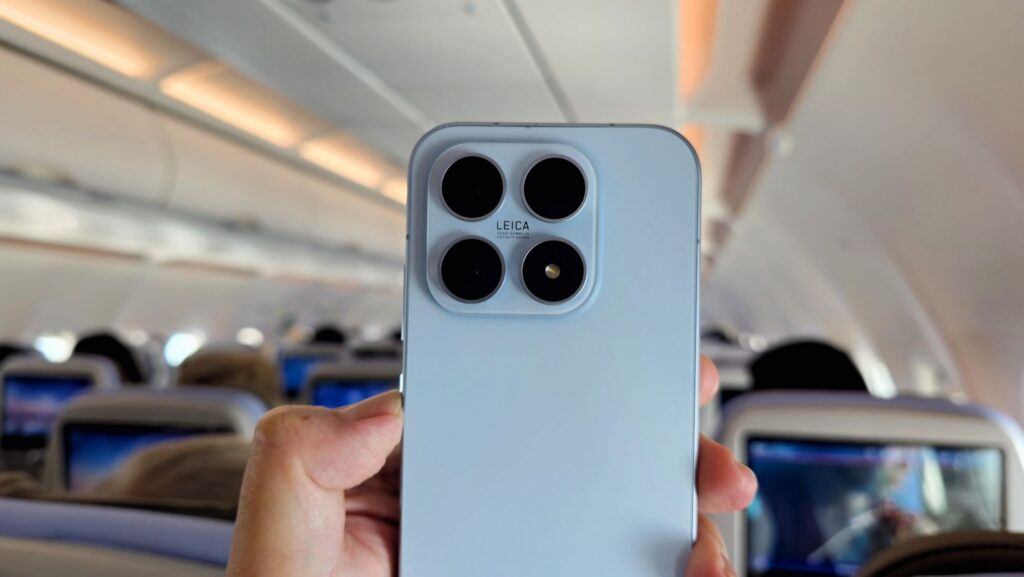
Combined, this setup allows for stills with up to 60X digital zoom and up to 8K@30fps video capture, as well as the more practical 4K@60fps video. The front also has a single 50MP camera that notably has autofocus for selfies and up to 4K@60fps video.
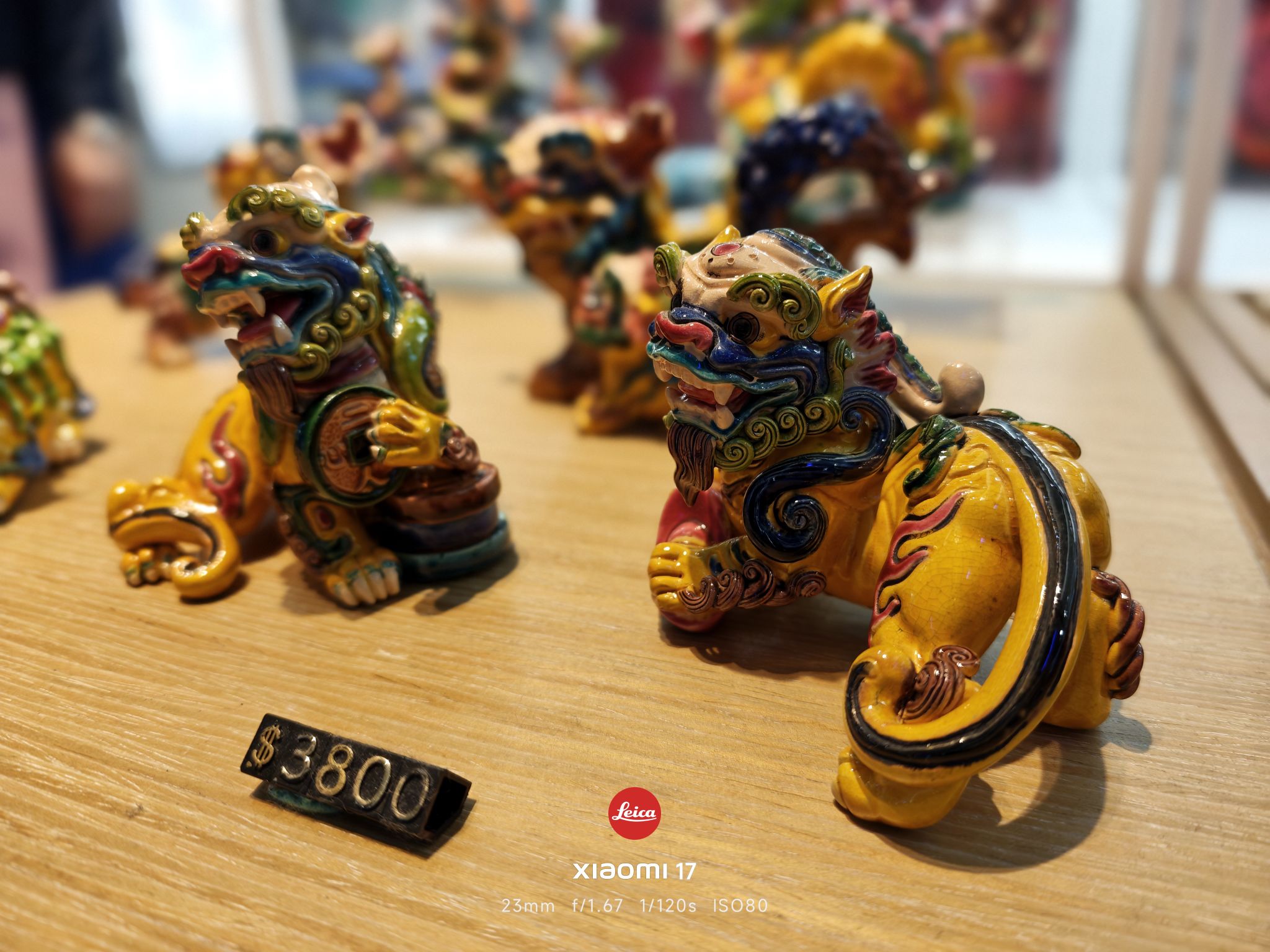
What gives the Xiaomi 17’s cameras their teeth isn’t just the hardware, respectable as it is, but the fact that its cameras are Leica-tuned, lending its images a distinctive Leica look with a choice of either Leica Vibrant for punchier hues or Leica Authentic for deeper, richer and slightly more muted and moodier shots.

Like recent flagships in the market, the Xiaomi 17 also has a host of AI tools to clean up images in post including an AI Erase Pro to remove unwanted parts of an image, AI Ultra HD to upscale shots, AI Cutout to snip and reposition subjects in a shot and Expand that adds in more background if you shoot too close to a subject.
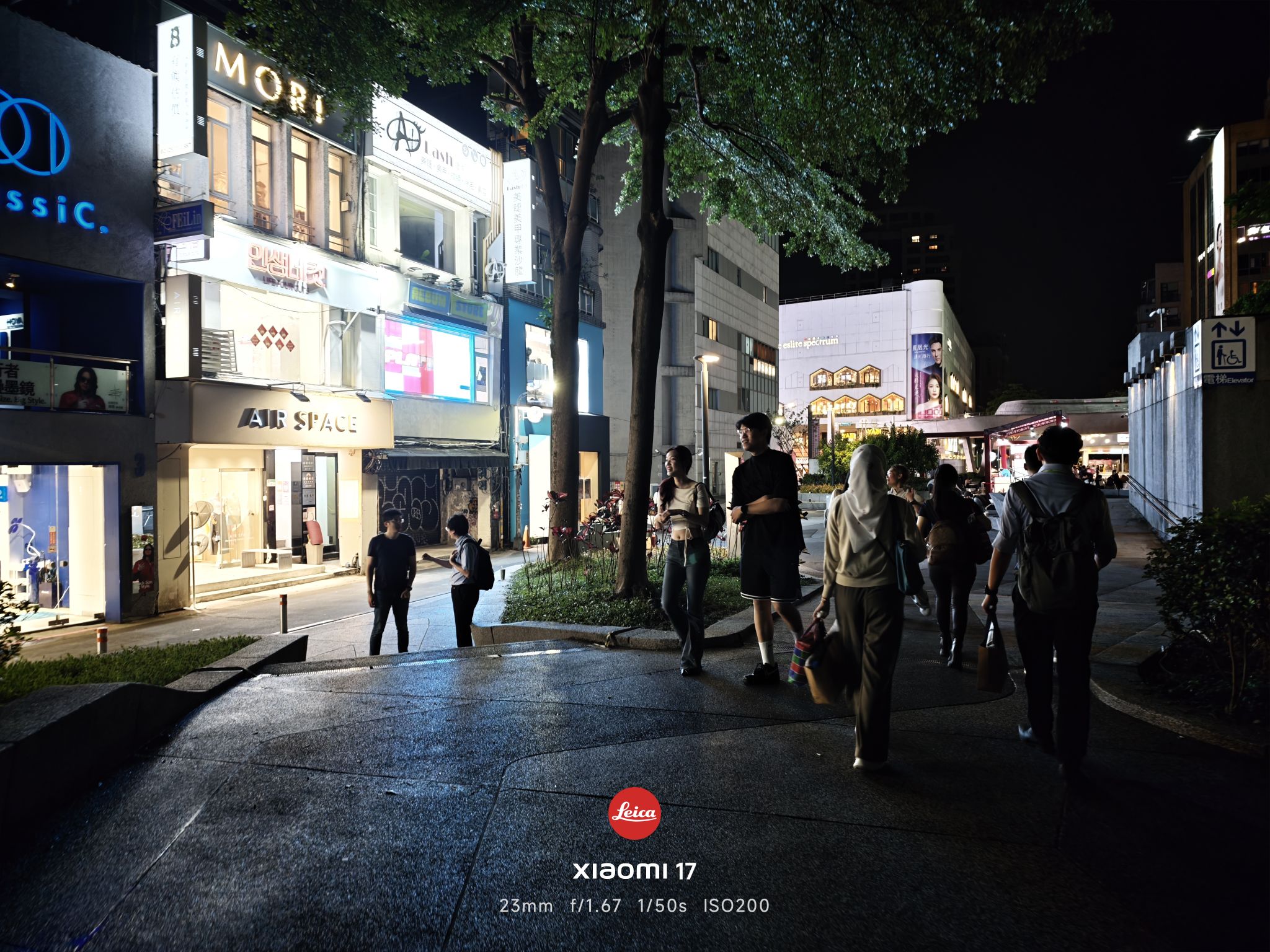


When taken for an extensive field test around Taiwan, our Xiaomi 17 review sample shined in street photography, with its compact dimensions allowing for easier use and more opportunities to capture subjects at the spur of the moment.



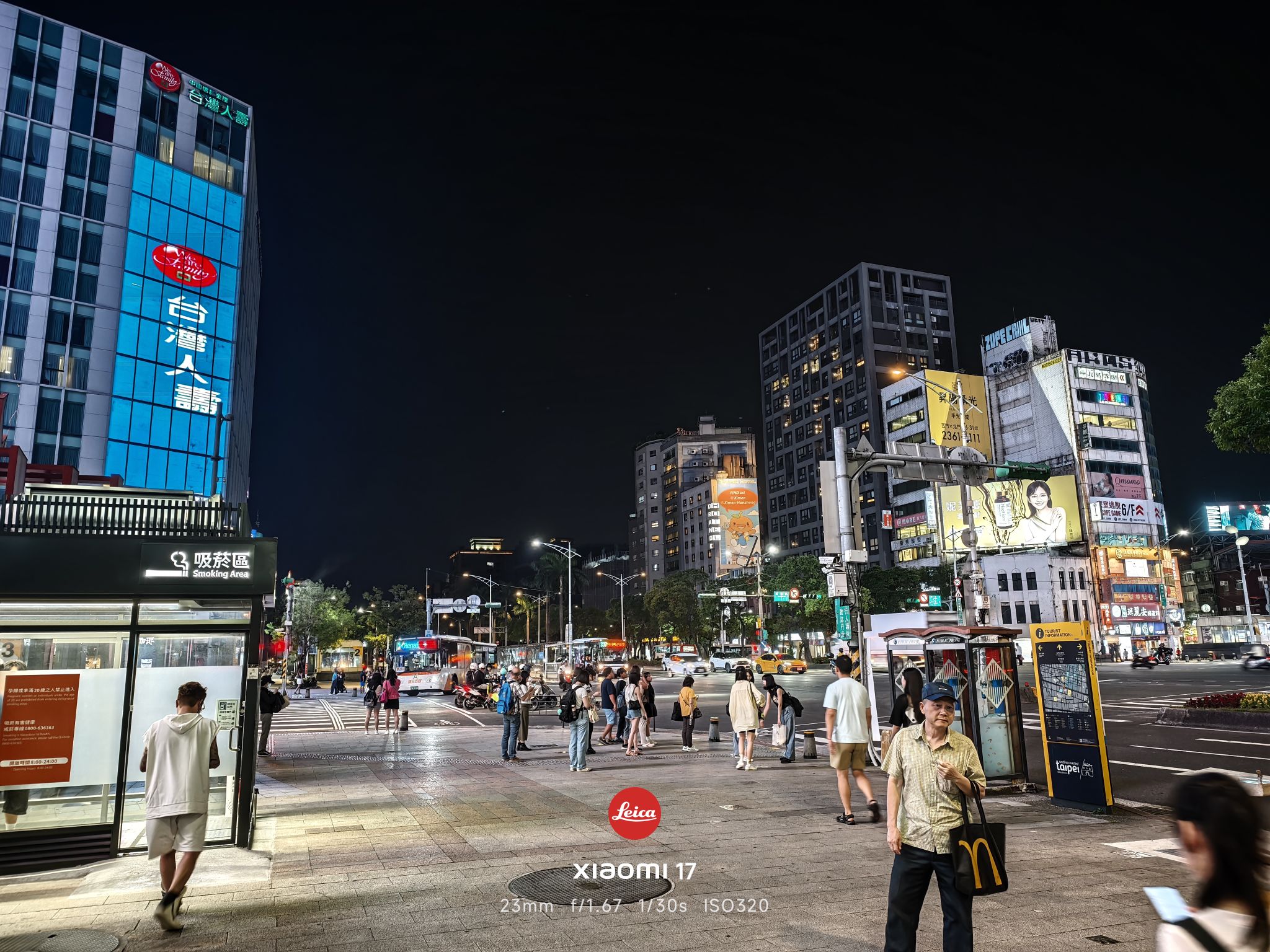
For the most part, the test shots below were set to Leica Authentic for a moodier look, and the camera offers excellent skin tones, detail and colour rendition in daylight conditions out to 2.6X zoom, though you can still get good snaps out to 5X.


In low light, Leica’s distinctive colour tuning is a bit more obvious, with a slight warm tint to shots alongside deeper blues and greens while retaining good skin tone accuracy and shadows. In general, you’ll get the best results out to 2.6X zoom, although the main and telephoto cameras remain capable beyond their native optical ranges.


Those who prefer the more popular, highly saturated aesthetic will likely prefer the Leica Vibrant look. It’s worth experimenting with both to see which look you prefer, especially before setting off on a major holiday or event.

The 50MP ultra wide angle camera is also capable of producing good results in daylight, with generally pleasing colours and decent detail, although it doesn’t quite match the main and telephoto cameras for overall image quality, particularly as light levels fall.
The front-facing 50MP selfie camera is able to yield good shots with accurate skin tones and good detail in both daylight and low-light conditions, although fine facial detail can soften somewhat in darker environments.
For video, the rear cameras offer steady, detailed footage with good dynamic range, with support for 4K@60fps, Dolby Vision and even 8K@30fps. For casual content creators, 4K@60fps is the more practical choice and produces footage that is more than good enough for social media and everyday content.
Should you buy the Xiaomi 17?
The Xiaomi 17 blends powerful flagship-grade performance, a huge battery belying its size and excellent cameras in a slim and compact form factor. If you are seeking a compact yet powerful phone, the Xiaomi 17 comes highly recommended.

Xiaomi 17 review sample courtesy of Xiaomi Malaysia. For more details and to purchase please visit https://www.mi.com/my/product/xiaomi-17/buy/
Xiaomi 17
-
Display
-
Performance
-
Cameras
-
Battery Life
-
AI Capabilities
-
Value
Xiaomi 17
The Xiaomi 17 blends powerful flagship-grade performance, a huge battery belying its size and excellent cameras in a slim and compact form factor. If you are seeking a compact yet powerful phone, the Xiaomi 17 comes highly recommended.
Pros
Fast and smooth performance
Great camera performance
Good price to performance ratio
Good battery life
Cons
Units in Malaysia don’t ship with 100W charger